
The Challenge of Disconnected Pool and Landscape Design
Most luxury pools fail to reach their full potential because they’re treated as standalone features rather than integrated estate elements. We see this pattern repeatedly: a homeowner invests in a beautiful pool installation, only to find the surrounding landscape looks hastily assembled or mismatched in style. The irrigation system waters generic shrubs that don’t complement the pool’s aesthetic. The deck transitions abruptly to lawn without any thoughtful hardscape connection. Drainage issues emerge because the grading wasn’t considered during the initial pool design phase.
These disconnects happen because pool construction and landscape design are often managed separately. Different contractors, different timelines, different visions. What results is a property where the pool sits isolated, lacking the architectural flow that defines true luxury outdoor living.
The real cost isn’t just visual. Improper integration leads to maintenance headaches, plant stress from competing water systems, and missed opportunities to increase your property’s value and usability. When we approach pool landscaping as an integrated system from day one, everything changes.
How Unified Pool Landscaping Creates Estate Value
Integration directly impacts your home’s appraisal and market appeal. Luxury buyers expect seamless transitions between outdoor spaces, cohesive design language, and functional outdoor living areas that feel intentional and refined. A thoughtfully landscaped pool environment signals quality and attention to detail across your entire estate.
Consider the difference: a backyard with a pool versus a backyard where the pool anchors a complete outdoor room system with defined zones for entertaining, dining, and relaxation. The second property commands premium pricing because it delivers functional luxury.
Beyond resale value, integrated design extends your usable outdoor season and elevates daily enjoyment. When the pool area connects visually and functionally to surrounding patios, kitchens, and seating zones, the entire landscape becomes more accessible and inviting throughout spring, summer, and fall.
We’ve found that estates with cohesive pool landscaping also experience fewer maintenance surprises. Proper irrigation systems designed for pool-adjacent plantings reduce water waste and plant failure. Strategic stone placement directs water appropriately. Thoughtful planting choices tolerate the microclimate created by water reflection and heat from the pool surround.
Our Comprehensive Design Approach to Pool Integration
We start by understanding your estate’s architecture, topography, soil conditions, and your vision for outdoor living. Rather than designing the pool in isolation, we map how it connects to existing structures, sight lines from your home, and the natural flow of your property.
Our design process includes:
- Architectural alignment: The pool’s shape, materials, and surround reflect your home’s style and existing hardscape elements
- Functional zoning: We define entertaining spaces, dining areas, utility zones, and transition corridors around the pool
- Sightline planning: Views from interior windows and key gathering spots influence pool placement and surrounding elements
- Drainage and grading: We establish water flow patterns early to prevent pooling, erosion, and structural issues
- Plant selection strategy: Landscaping species are chosen for compatibility with pool chemicals, heat reflection, and aesthetic contribution
This integrated approach means your pool becomes the centerpiece of a cohesive outdoor environment rather than a feature that disrupts your landscape.
Custom Irrigation Solutions That Complement Your Pool
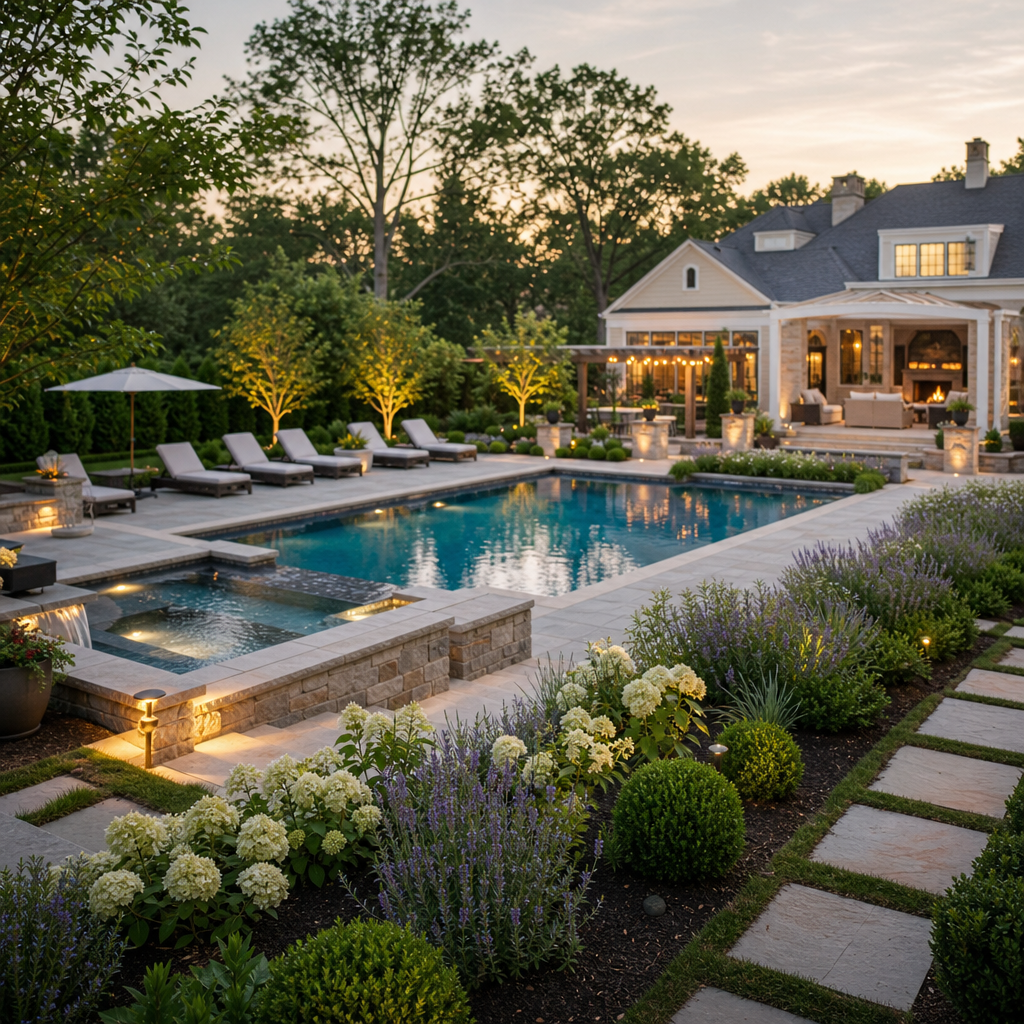
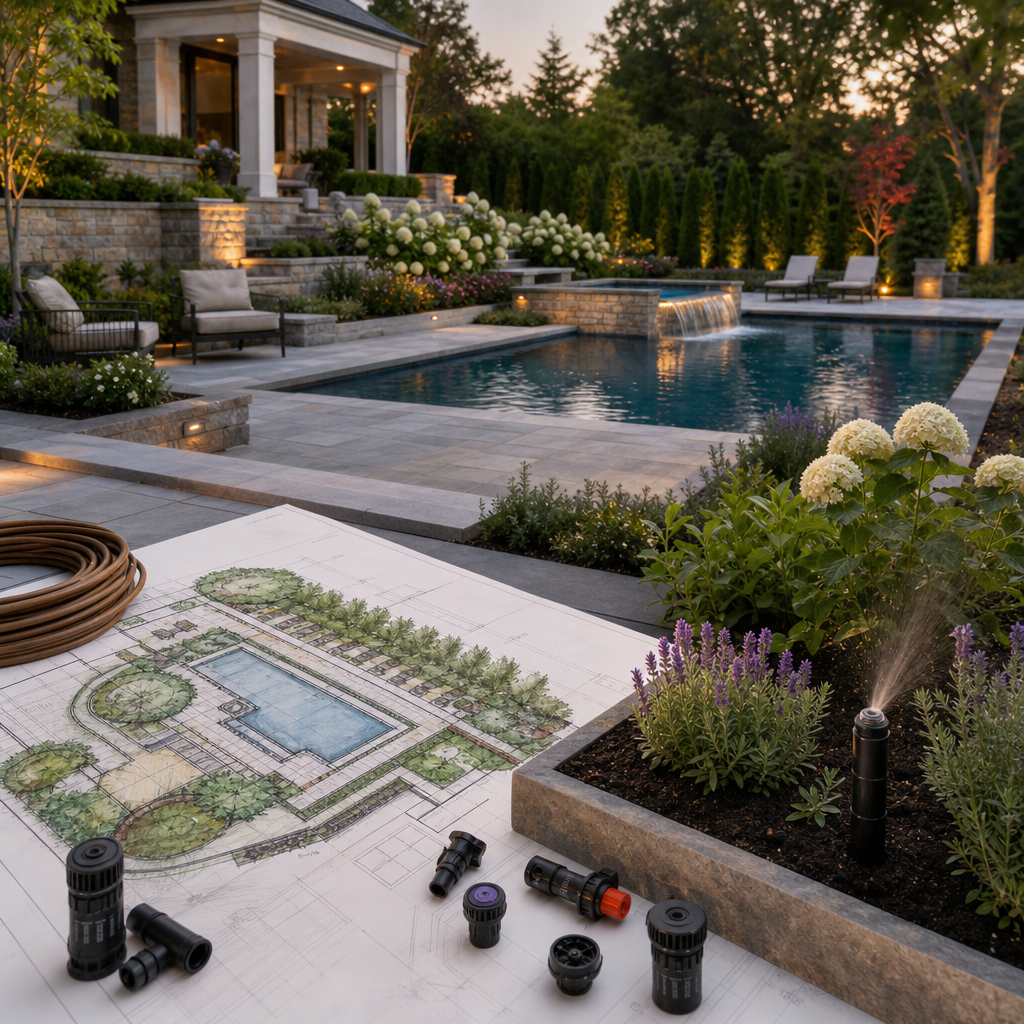
Irrigation near pools presents unique challenges. Pool water isn’t suitable for plants, and standard spray patterns can waste water or create unwanted overflow. We design custom systems that account for these realities.
Our approach typically involves:
- Separated zones: Dedicated irrigation lines for plantings around the pool, separate from any decorative water features
- Low-volume drip systems: For plant beds immediately adjacent to the pool, we often recommend drip irrigation that waters directly at the root zone, minimizing splash and evaporation
- Smart scheduling: Irrigation controllers can be programmed to avoid peak sun hours when water loss is highest and to adjust seasonally
- Soil moisture sensors: These devices ensure plants receive adequate water without overwatering, which is particularly important in sandy Long Island soils
We also consider the pool’s chemical balance when planning irrigation placement. Salt chlorine generators and traditional chlorine systems both benefit from irrigation that doesn’t pull treated water back into the pool or create cross-contamination risks.
Masonry and Stone Elements Around Pool Spaces
Stone and masonry work define the transition between pool and landscape. These materials must be slip-resistant, aesthetically aligned with your home’s architecture, and durable against chlorine, salt, and sun exposure.
We frequently specify:
- Pool deck materials: Brushed pavers, textured stone, or aggregate finishes that provide traction while maintaining elegance
- Surrounding retaining walls: Custom stonework that manages grade changes and creates visual boundaries between functional zones
- Decorative stone veneers: Applied to existing structures or new construction to echo architectural details from your home
- Natural stone plantings beds: Raised beds with stone borders provide definition and accessibility while improving drainage for sensitive plantings
Each stone element is positioned to enhance drainage, create intentional sight lines, and reinforce the overall design language of your estate. We source materials that complement your home’s existing palette and specify installation methods that ensure longevity in our coastal climate.
Outdoor Living Spaces That Connect to Your Pool
The pool itself isn’t where most entertaining happens. We design the surrounding areas to encourage gathering, dining, and relaxation while maintaining sightlines to water features and maintaining the property’s cohesion.
Connected outdoor living typically includes:
- Lounge and seating zones: Positioned to provide shade when needed and clear views of the pool
- Outdoor kitchens and bars: Located within comfortable distance of the pool but with defined separation from the waterline
- Dining areas: Covered or open structures that allow al fresco meals while protecting furnishings
- Fire features and gathering points: Elements that extend seasonal usability and create evening ambiance
These spaces work best when hardscape, plant material, and architectural elements create a natural progression from one zone to the next. Rather than scattered furniture scattered across a bare lawn, integrated design creates purposeful rooms defined by stonework, plantings, and structural elements.
Landscape Planting Strategies for Pool Environments
Not all plants thrive near pools. Salt spray (particularly on North Shore properties), reflected heat, chlorine drift, and intense sun exposure all influence what grows successfully in these zones.
We typically recommend:
- Heat-tolerant species for sunny exposures: Ornamental grasses, coneflowers, black-eyed Susans, and Russian sage tolerate full sun and reflected pool heat
- Salt-hardy plantings for exposed areas: Eastern red cedar, bayberry, and shore juniper handle coastal conditions
- Screening plants for privacy: Evergreen shrubs like arborvitae and privet create year-round visual barriers without blocking breezes
- Specimen trees for architectural interest: Crape myrtles, Japanese maples, and native dogwoods provide seasonal color and structure
- Low-maintenance groundcovers: Sedum, creeping thyme, and ornamental grasses reduce maintenance while providing visual softness
We avoid plantings that drop excessive debris (messy in pools), produce allergens near seating areas, or demand water conditions incompatible with coastal Long Island soils.
Water Management and Drainage Considerations
Proper drainage prevents one of the most common pool-area problems: standing water, erosion, and waterlogged plantings. We establish grading that directs water away from structures, pool equipment, and plant beds that prefer well-drained conditions.
Key considerations include:
- Positive slope away from pools and homes: Typically 1-2% slope ensures water moves naturally
- Swales and drainage channels: These guide water safely across hardscape without visible ditches
- Subsurface drainage: French drains or perforated pipe systems manage water in low spots or clay-heavy soils
- Permeable paving: In some areas, pervious pavers allow water infiltration rather than surface runoff
- Elevation changes: Subtle berming and grading create visual interest while improving drainage
Without attention to water management, pool areas become soggy, plants struggle, and equipment deteriorates faster. We engineer these systems to be invisible from a design perspective while functioning flawlessly.
Creating Year-Round Pool Area Functionality
Long Island’s climate allows outdoor space enjoyment well beyond summer months. Strategic design extends the season substantially.
Year-round features include:
- Covered structures: Pergolas, pavilions, or shade sails provide protection during shoulder seasons
- Fire features and heating: Outdoor fireplaces or heaters transform fall and spring evenings into gathering opportunities
- Transition plantings: Species chosen for seasonal color keep the landscape visually interesting even when the pool isn’t actively in use
- Outdoor kitchens with weather protection: Built-in appliances and roofed spaces allow outdoor entertaining beyond summer
- Lighting design: Layered lighting creates ambiance for evening use and highlights landscaping features year-round
While the pool may be less central during winter, the surrounding landscape and outdoor living spaces remain functional and beautiful, maximizing your investment across all seasons.
The Construction Process for Integrated Pool Projects
We manage integrated pool and landscape projects as coordinated phases rather than sequential independent tasks. Our process ensures no surprises and maintains design integrity from concept through completion.
The typical sequence involves:
- Site preparation and grading: Establish drainage patterns and pool basin before major landscaping begins
- Pool shell and utility installation: Build the pool structure, plumbing, and electrical systems
- Hardscape construction: Install pavers, stone, walls, and outdoor structures
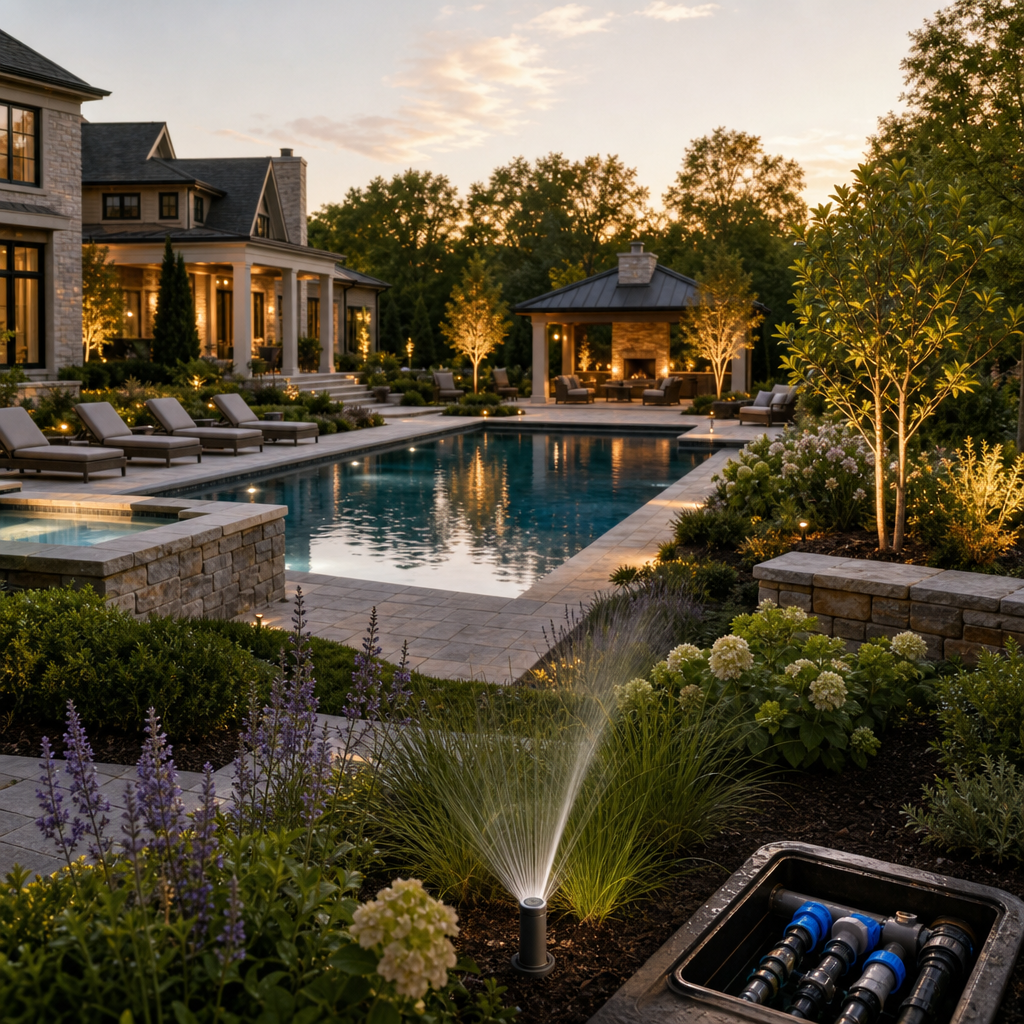
- Irrigation installation: Run lines and establish zones that complement the pool without interference
- Planting and finishing: Install plant material, mulch, and final details
- Systems testing and adjustment: Verify drainage, irrigation, pool systems, and all integrated elements function properly
This coordinated approach prevents costly rework and ensures every element serves the overall design vision.
Maintenance Planning for Integrated Landscapes
A beautiful integrated pool landscape requires a realistic maintenance plan. We help you understand what’s involved and recommend approaches that balance aesthetics with practical upkeep.
Maintenance considerations include:
- Seasonal cleanup: Leaf removal, deadheading, and pruning cycles
- Irrigation adjustment: Seasonal watering schedules that change as weather shifts
- Hardscape maintenance: Occasional power washing and seal treatments for stone and pavers
- Plant health monitoring: Early identification of stress, pest issues, or poor adaptation
- Pool-adjacent plantings: More frequent attention than general landscaping because proximity to pool chemicals and reflected heat create unique conditions
We provide detailed maintenance guides and can recommend local services if you prefer professional support for ongoing care.
Transform Your Estate with Seamless Pool Landscaping
A truly luxurious outdoor estate doesn’t happen by accident or through disconnected projects. It requires intentional, integrated design from professionals who understand how pools, irrigation, hardscape, plantings, and living spaces work together as a complete system.
We bring full-service expertise to every aspect of pool landscaping and irrigation integration. From initial design through final installation and long-term planning, we treat your estate as the cohesive property it should be.
If you’re ready to transform your Long Island property into a seamless luxury outdoor environment where your pool anchors a complete lifestyle space, we’d welcome a conversation about your vision and how we can bring it to life.
Contact us today for a free estimate!
Frequently Asked Questions (FAQ)
How do we ensure our pool landscaping and irrigation work together seamlessly?
We design integrated systems from the start, coordinating pool construction with landscape planning and irrigation layout so everything functions as one cohesive environment. Our team handles both the hardscape elements like stone and masonry around your pool and the planting and irrigation beyond it, eliminating the disconnects that happen when different contractors work separately.
What irrigation approach do we recommend for luxury pool environments?
We customize irrigation systems to complement your pool’s aesthetics while managing water efficiently across planted areas and outdoor living spaces. We consider factors like plant types, drainage patterns, and seasonal maintenance to create solutions that keep your entire estate looking polished year-round without waste.
Can we modify our pool and landscape design after construction begins?
We build flexibility into our construction process and maintain regular communication with you throughout the project, so adjustments can be made when needed. However, we recommend finalizing design details during our initial planning phase to avoid delays and additional costs down the line.