
Why Permit Requirements Matter for High-End Outdoor Projects
Navigating permit requirements for luxury outdoor projects on Long Island can feel overwhelming. Between zoning regulations, building codes, and municipal approval timelines, many homeowners underestimate the complexity involved in transforming their backyards. At Monarc Creative Group, we handle these details so you can focus on envisioning your dream outdoor space.
Permits exist to protect your investment, your neighbors, and your community’s infrastructure. A properly permitted pool or outdoor kitchen project ensures structural safety, proper drainage, electrical compliance, and gas line installation done to code. Without permits, you risk fines, forced project halts, difficulty selling your property, and liability issues if something goes wrong.
For high-end residential projects, permits become even more critical. Luxury homes often sit on properties with specific deed restrictions, homeowners association rules, or historic district considerations. A permit review catches potential conflicts before construction begins, saving you thousands in redesign costs and construction delays.
Beyond legal compliance, permits establish a clear record of your improvements. When it comes time to refinance or sell, documented, approved construction directly supports your property appraisal and buyer confidence. We’ve seen projects without proper permits require expensive remediation or even removal, completely negating the homeowner’s initial investment.
Action step: Before breaking ground, verify your property’s zoning classification and any covenants or HOA restrictions by reviewing your deed and contacting your local planning department.
Understanding Long Island Zoning and Building Codes
Long Island operates under two primary county systems: Nassau County and Suffolk County, each with distinct zoning ordinances and building departments. Nassau tends to be denser, with smaller lots and stricter setback requirements. Suffolk County properties generally offer more space but maintain equally rigorous environmental protection standards, especially in areas near aquifers and wetlands.
Both counties follow New York State Building Code and the International Building Code as their foundation. Key requirements for outdoor projects include:
- Setback distances from property lines (typically 10-25 feet depending on zoning district)
- Impervious surface limits (percentage of lot you can cover with hardscaping)
- Wetland and flood zone restrictions
- Stormwater management regulations
- Height restrictions for walls, structures, and landscaping
Residential zones vary widely. An R-40 zone (40,000 square feet minimum lot size) allows vastly different structures than an R-7.5 zone. Your property’s classification determines whether a pool structure even requires a variance, and what size outdoor kitchen you can legally construct without special approvals.
We recommend obtaining a zoning verification letter from your local building department before finalizing your design. This inexpensive document clarifies what’s permitted on your specific parcel and prevents expensive design revisions mid-project.
Pool Installation Permits: What Every Luxury Homeowner Must Know
Pool permits are among the most strictly regulated outdoor construction projects on Long Island. New York State requires permits for any swimming pool exceeding 24 inches in depth, regardless of size or configuration. This includes saltwater pools, infinity pools, lap pools, and spa components.
The permit application typically requires:
- Stamped architectural or engineering plans showing pool dimensions, depth, location, and distance from property lines
- Grading and drainage plan demonstrating how water will be managed
- Electrical plan for underwater lighting, pumps, and control systems
- Chemical handling and circulation specifications
- Soil and percolation test results for drainage feasibility
- Proof of easements or permissions if the pool affects adjacent properties
County inspectors evaluate pools at multiple stages. Initial inspection occurs after excavation but before any concrete or structural work. Follow-up inspections verify proper plumbing, electrical connections, and safety features like drains, ladders, and signage. Final inspection confirms the pool meets all approved plans before you fill it.

For luxury installations involving connected spas, water features, or elevated pool decks, expectations increase. Engineering firms may need to certify soil bearing capacity, especially in areas with clay-heavy soil or high water tables common across Long Island.
Action step: Engage a licensed pool contractor early who can coordinate with engineers and prepare permit documents. This prevents costly design revisions after application submission.
Outdoor Kitchen Permits and Compliance Standards
Outdoor kitchens require permits whenever they include fixed cooking appliances, particularly gas grills, built-in refrigeration, or permanent sinks connected to your home’s plumbing. A simple standalone grill doesn’t require a permit; a built-in kitchen with running water and gas lines absolutely does.
The permitting authority will scrutinize:
- Gas line installation and safety distances from windows, doors, and property lines
- Electrical system design and weatherproof outlet placement
- Plumbing connections and septic impact (if applicable)
- Roof and overhead structure load calculations if adding a pergola or pavilion
- Ventilation and smoke clearance requirements
- Countertop materials and fire-rated surfaces near cooking zones
Most municipalities require licensed contractors for gas and electrical work. Kitchen permits typically take longer than you’d expect because multiple inspectors may need to sign off: building, plumbing, electrical, and fire departments all have jurisdiction over different aspects.
Material choices matter too. Granite countertops and stainless appliances look beautiful, but the permit review confirms they meet outdoor durability standards and won’t degrade from weather exposure. We specify materials that pass inspection while delivering the luxury aesthetic you’re paying for.
Action step: If planning an outdoor kitchen, request a preliminary meeting with your building department to understand local gas line placement rules, which vary significantly between Nassau and Suffolk counties.
How We Navigate the Permitting Process for You
We handle the entire permitting workflow so you’re never caught off guard by municipal requirements. Our process begins with a detailed site assessment: measuring your lot, identifying setback lines, reviewing soil conditions, and photographing existing structures. This information informs our initial design and alertness to potential permit obstacles.
Our design team then creates permit-ready documents that meet or exceed municipal standards. We work with licensed engineers and architects to produce stamped plans, drainage calculations, and structural certifications required for approval. Rather than submit bare-minimum applications that generate revision requests, we anticipate questions and include comprehensive documentation upfront.
We maintain relationships with building departments across Nassau and Suffolk counties. This familiarity helps us understand each municipality’s priorities and approval timelines. We know which inspectors prioritize certain details and can coordinate inspection schedules efficiently once construction begins.
If complications arise, we problem-solve on your behalf. Unusual soil conditions? We order percolation testing. Setback conflicts? We work with our engineers to explore design modifications. Variance required? We prepare variance applications and present your case to the zoning board. You stay informed throughout, but we manage the details.
Timeline Expectations: From Application to Construction Start
Permit timelines vary based on project complexity and municipal workload. Here’s a realistic breakdown:
Design and application preparation: 3-6 weeks. This allows time for site surveys, engineering analysis, and plan creation. Rushing this phase causes revision requests later.
Permit review: 4-8 weeks for standard pool projects; 6-12 weeks for complex kitchens or combined applications. Some municipalities review within two weeks; others take three months.
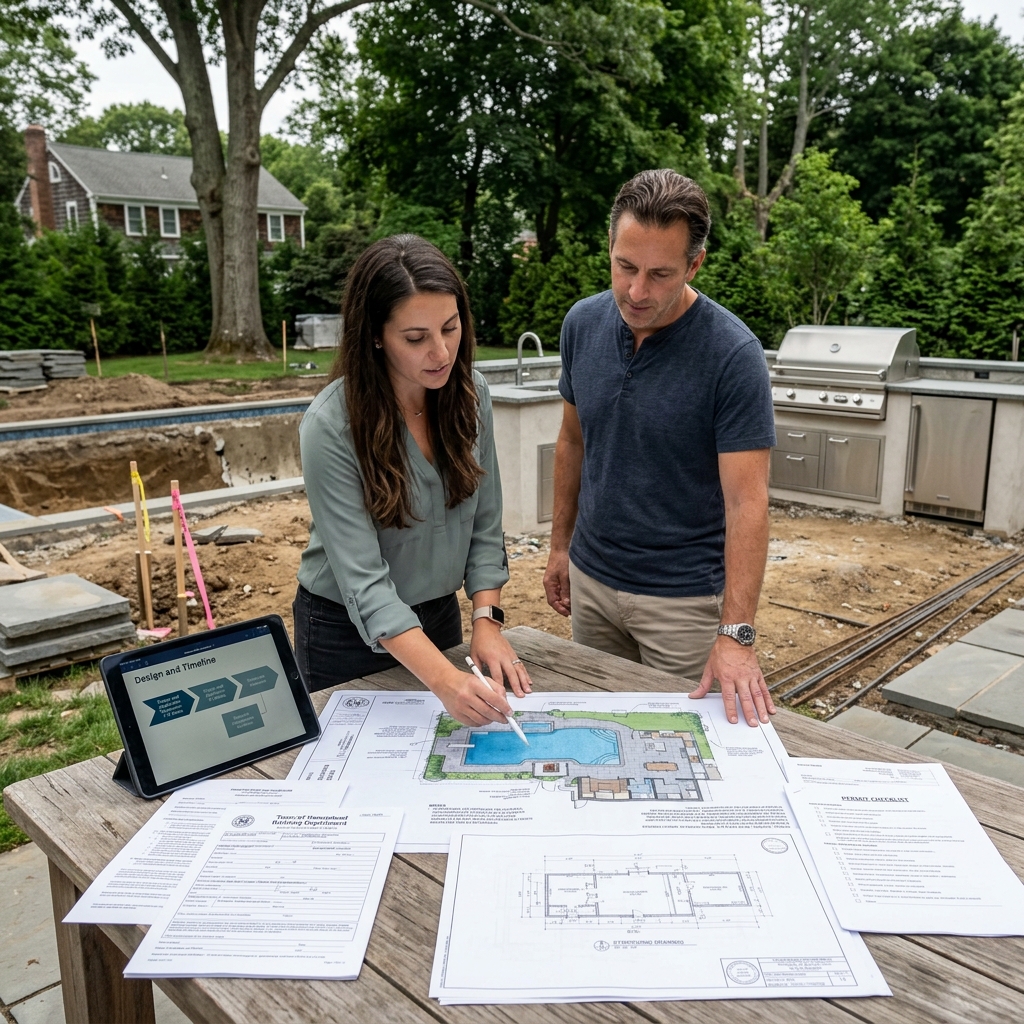
Revisions and resubmission (if needed): 2-4 weeks. Most permits require at least one revision round.
Final approval and construction start: 1-2 weeks after approval.
Total realistic timeline: 12-26 weeks from initial concept to groundbreaking.
Many homeowners underestimate this timeline and expect construction to begin in 6-8 weeks. We’ve learned to set proper expectations early. Projects planned around seasonal deadlines, like completing a pool by summer, need to begin permit applications in late winter.
Weather also impacts timelines. Winter weather can delay site surveys and soil testing. Summer inspections sometimes get backed up when multiple projects are underway. Planning your permit application strategically around seasonal demand improves your chances of faster approval.
Action step: If you have a completion target date, work backward 24 weeks to determine when permit applications should be filed.
Common Permit Challenges and How We Solve Them
Soil and drainage issues occur frequently on Long Island. Our region’s high water table and clay-heavy soils complicate pool installation and outdoor kitchen drainage. When preliminary soil testing reveals poor percolation, we design alternative drainage solutions: French drains, rain gardens, or subsurface drainage systems that satisfy both aesthetic goals and permit requirements.
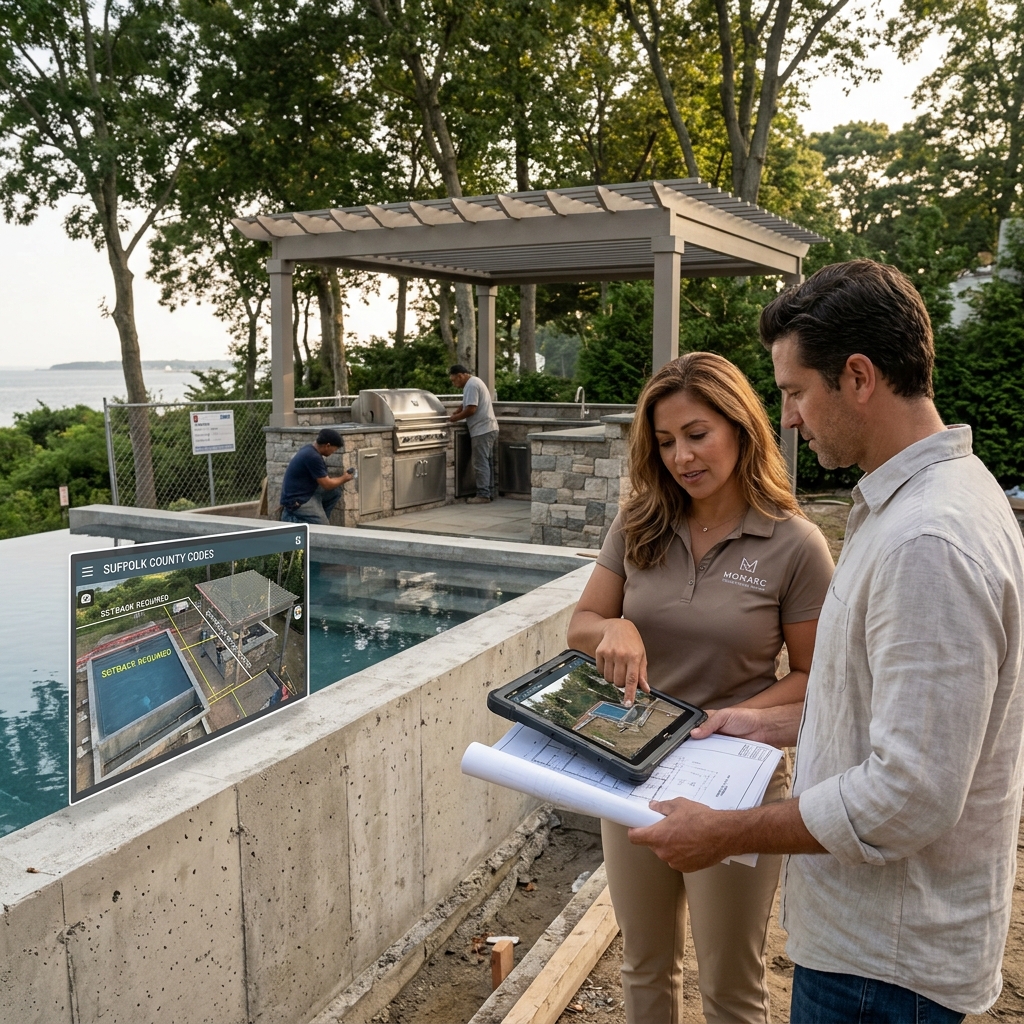
Setback conflicts arise when luxury properties sit on smaller-than-average lots. A homeowner wants a resort-style pool spanning their entire yard, but zoning requires 15-foot setbacks on all sides. We work with our engineers to explore variance applications, demonstrating that the proposed design won’t negatively impact neighbors or violate health codes. Sometimes this means reimagining the design to fit within permitted dimensions.
Utility conflicts emerge when gas, electric, or water lines sit near proposed structures. We order utility locate services and adjust designs accordingly rather than discovering buried cables during excavation.
Environmental restrictions protect Long Island’s aquifer and wetland systems. Properties in certain zones require additional stormwater management or wetland buffers. Early consultation with environmental engineers prevents mid-project discovery of protected areas.
We also handle the occasional unexpected neighbor objection. While permits are administrative approvals, vocal neighbor concerns sometimes trigger additional review. We maintain professional communication and provide documentation showing our design respects property lines and doesn’t create hazardous conditions.
Action step: Request a free pre-permit consultation where we can walk your property, identify potential obstacles, and provide a realistic assessment before you commit to design.
Ensuring Your Investment Meets All Safety and Legal Requirements
Permits exist, fundamentally, because safety matters. Electrical systems in outdoor kitchens must use GFCI protection to prevent shock hazards. Gas lines require proper sizing, shutoff valves, and regular inspection access. Pool drains need dual drain systems to prevent entrapment hazards. These aren’t bureaucratic inconveniences; they’re the difference between a safe family retreat and a liability nightmare.
We view permit compliance as the foundation of your investment’s value. A properly permitted, inspected pool or kitchen will serve your family for decades with predictable maintenance. Unpermitted work invites problems: corroded gas lines, failed electrical systems, structural settling on poorly designed foundations.
Insurance presents another critical layer. Your homeowner’s policy may exclude coverage for unpermitted construction. If someone is injured in an unpermitted pool or kitchen, your insurance may deny the claim. The liability exposure is substantial for high-net-worth homeowners.
We also think long-term. When you eventually sell your property, title insurance and buyer financing depend on documented, permitted construction. Unpermitted work becomes a disclosure liability that depresses your sale price or kills the deal entirely.
Action step: Verify your homeowner’s insurance covers all planned outdoor improvements and requires proof of permits before construction completion.
Our End-to-End Permit Management Services
Our permit management service encompasses the entire journey from initial concept to construction start. We begin with a complimentary site evaluation, understanding your vision and identifying potential regulatory hurdles. We then prepare a project timeline and feasibility assessment.
Once you approve our design direction, we coordinate with licensed engineers and architects to produce permit-ready documentation. We handle all application submissions, follow-ups with building departments, and revision management. As inspection dates approach, we prepare your property and coordinate with inspectors on your behalf.
Our team tracks inspection schedules, ensures work remains compliant during construction, and coordinates final approvals before homeowners assume occupancy. We also provide you with complete documentation packages: as-built drawings, warranty information, inspection records, and maintenance protocols.
The investment in professional permit management pays dividends. Projects run faster because we avoid costly revision cycles. Inspections pass cleanly because our work anticipates requirements. Your finished pool or kitchen meets every code requirement and documentation proves it.
Moving Forward With Your Luxury Outdoor Transformation
Permit navigation shouldn’t delay your outdoor dreams. By understanding Long Island’s regulatory landscape and planning strategically, you can transform your property into the luxury outdoor environment you’ve envisioned. The permits ensure your investment is safe, legal, and documented.
We’re ready to guide you through the entire process. Reach out to schedule your free site consultation, where we can assess your property, discuss your vision, and provide a realistic project timeline and cost estimate for permitting and construction. Let’s build your outdoor masterpiece the right way, with all the approvals in place and the confidence that your investment will deliver beauty and value for years to come.
Contact us today for a free estimate!
Frequently Asked Questions (FAQ)
What permits do we typically need for a luxury pool and outdoor kitchen project on Long Island?
We handle all permit requirements, which generally include a building permit for the pool structure, electrical permits for pool lighting and equipment, plumbing permits for water lines and drainage, and a separate building permit for outdoor kitchen construction. Depending on your property’s location in Nassau or Suffolk County, you may also need zoning variances if your project affects setback requirements or lot coverage limits. We assess your specific property during our initial consultation to identify every permit needed before construction begins.
How long does the permitting process usually take before we can start construction?
We typically experience a 4 to 8 week timeline from application submission to approval, though this varies by municipality and project complexity. Some Nassau County departments move faster than Suffolk County offices, and projects requiring variances take longer than standard permits. We manage all submissions and follow-ups with local authorities, keeping you informed at each stage so you understand when construction can realistically begin.
What happens if our project encounters permit complications or rejections?
We’ve navigated nearly every obstacle that arises during the approval process and know how to address engineer concerns, code violations, or neighbor objections. If we encounter a rejection, we either modify the design to meet requirements or file for a variance with the appropriate supporting documentation. Our experience means we often anticipate these issues upfront and design projects that sail through the approval process rather than face delays later.