
Why Premium Outdoor Projects Require Strategic Planning
High-net-worth homeowners often approach luxury outdoor projects with the same expectations they bring to interior renovations: a clear budget, a defined timeline, and predictable outcomes. The reality is more nuanced. Outdoor living transformations involve weather variables, subsurface conditions, permitting delays, and material sourcing challenges that indoor work rarely encounters. Understanding what influences cost and schedule helps you make informed decisions and avoid surprises down the line.
Luxury outdoor spaces are not DIY territory. They’re engineered environments that integrate structural systems, irrigation networks, electrical infrastructure, and architectural finishes. A high-end pool installation isn’t simply digging a hole and filling it with water; it involves soil testing, drainage assessment, equipment staging, and code compliance verification before the first shovel turns soil.
The complexity multiplies when you’re coordinating multiple trades. A custom outdoor kitchen requires a general contractor, masons, electricians, plumbers, and HVAC specialists working in sequence. One delay upstream creates a cascade effect downstream. Strategic planning identifies these dependencies upfront, establishes realistic buffers, and ensures every dollar serves your vision rather than firefighting problems.
When we approach a project, we treat planning as the foundation for success. This means conducting thorough site evaluations, understanding local codes, and aligning design intent with constructability before breaking ground. A well-planned project typically stays on schedule and within budget. One that skips these steps invites cost overruns and timeline extensions.
What to do next: Schedule a site consultation before finalizing your design vision. This conversation identifies hidden complexity and sets accurate expectations.
Understanding the Scope: Design, Materials, and Complexity
Scope creep is the silent budget killer. A homeowner initially envisions a simple pool, then adds a spa, then wants it integrated with a new outdoor kitchen, then decides the surrounding landscape needs complete redesign. Each addition is reasonable individually, but collectively they shift timelines and costs significantly.
Material selection drives luxury project budgets more than labor does. Choosing natural stone instead of pavers, selecting imported Italian fixtures versus domestic equivalents, or upgrading to commercial-grade outdoor kitchen appliances each carries substantial cost implications. A limestone terrace and a stamped concrete pad both function identically, but they create vastly different aesthetic and financial outcomes.
Complexity also relates to your site itself. A sloped property requires retaining walls and extensive grading. A site with mature trees demands careful planning to preserve them while constructing around root systems. Proximity to utilities, existing structures, and property lines all influence how we approach design and execution.
We evaluate scope comprehensively during the design phase, breaking down every element and its cost implications. This transparency helps you prioritize investments and understand where premium materials justify their expense versus where standard solutions make more sense.
What to do next: Create a detailed wish list and rank features by priority. This helps us identify which elements deliver the greatest value for your investment.
Timeline Phases: From Concept to Completion
Luxury outdoor projects typically follow four distinct phases, each with its own duration and dependencies.
Design and Planning (4-8 weeks): This phase covers site analysis, concept development, material selection, and permit preparation. We work closely with you to refine the vision, establish the budget, and ensure the design aligns with both your goals and local regulations. This phase cannot be rushed without sacrificing quality in later stages.
Permitting and Approvals (2-6 weeks): Depending on your project scope, permits may be required for pool installations, electrical work, structures, or site modifications. Nassau and Suffolk counties have varying approval timelines. Some projects need multiple permits processed sequentially rather than in parallel, extending this phase considerably.
Construction (8-16 weeks): This is where physical transformation happens. For a comprehensive outdoor living space including pool, spa, kitchen, and landscaping, expect 12-16 weeks for full completion. Simple pool installations might complete in 8-10 weeks. Weather significantly impacts this timeline, particularly during winter months when ground conditions become problematic.
Final Details and Closeout (1-2 weeks): Finishing touches, equipment calibration, landscape establishment, and client walkthrough occur during this phase. Quality matters here; this is when we ensure everything functions as designed.
A realistic full-scope project from first meeting to your first gathering typically requires 5-7 months total. Rushing any phase compromises quality and often creates expensive rework.
What to do next: Discuss your desired completion date during initial consultation. We’ll map backward from that deadline to establish realistic phase timing.
Budget Breakdown: Where Your Investment Goes
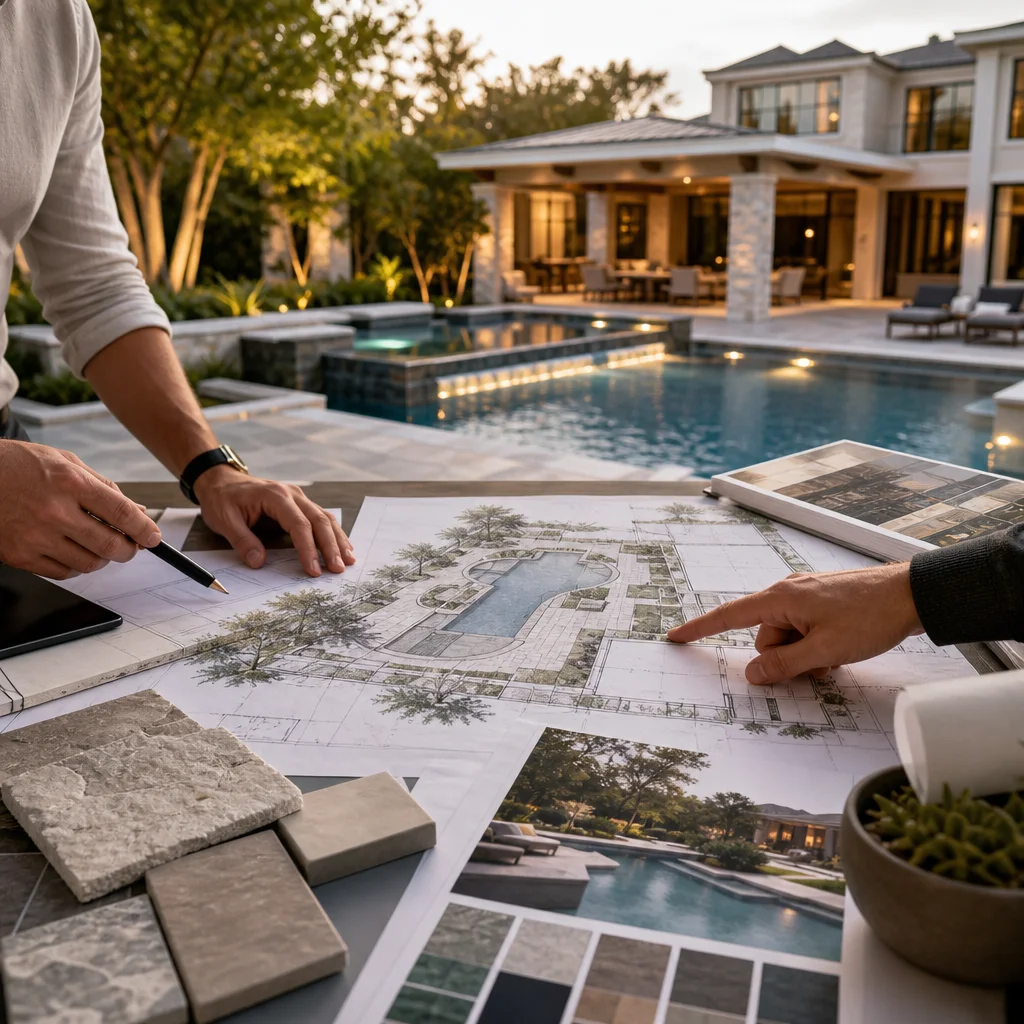
Understanding budget allocation helps you see where your money creates value. In luxury outdoor projects, we typically allocate spending across these categories:
Design and Engineering (8-12%): Professional design work, site surveys, structural calculations, and permit documentation ensure your project is both beautiful and buildable. This isn’t money wasted on paper; it’s investment in a solid foundation.
Materials and Products (40-50%): This covers everything from stone and hardscape materials to pools, spas, outdoor kitchen equipment, and landscape plants. Premium materials justify their cost through durability, aesthetics, and longevity.
Labor and Construction (25-35%): Skilled tradespeople, project management, and construction oversight ensure quality execution. Luxury work requires experienced teams; this investment differentiates a stunning transformation from a merely functional one.
Permits and Compliance (2-5%): Professional permit services, inspections, and code compliance work protect your investment and ensure your outdoor space is legitimate and insurable.
Contingency (10-15%): We reserve a contingency buffer for unforeseen conditions discovered during construction, like unexpected soil composition or required drainage modifications.
A comprehensive luxury outdoor living transformation typically ranges from $150,000 to $500,000+ depending on size, material selections, and feature complexity. Smaller projects focused on a new pool or landscape might range $75,000 to $150,000.
What to do next: Establish a realistic budget range before design begins. This focuses our recommendations on solutions that deliver maximum value within your investment parameters.
How Our Full-Service Approach Protects Your Timeline and Budget
Coordinating multiple contractors independently creates coordination failures, communication gaps, and finger-pointing when issues arise. Our full-service model eliminates these problems by consolidating responsibility under one project management umbrella.
We manage all trades, schedule sequences, quality inspections, and client communication. When a masonry team finishes and the pool contractor needs to begin excavation, we coordinate the transition. When unexpected soil conditions appear, we’re authorized to make decisions rather than waiting for multiple parties to reach consensus.
This integrated approach also protects your budget. We maintain established relationships with material suppliers, equipment vendors, and skilled tradespeople, which often yields better pricing than coordinating independently. More importantly, our project management experience prevents common cost escalations.
We take ownership of timeline and budget performance. Rather than passing cost responsibility to you, we bear the risk of delivering on our commitments. This alignment of interests ensures we’re motivated to execute efficiently without cutting corners.
What to do next: Request our project management guarantee and understand how we handle unexpected conditions discovered during construction.
Material Selection and Its Impact on Project Cost
A premium natural stone pool surround costs 2-3 times more than stamped concrete, but it also appreciates less visibly and maintains its character for decades. Understanding these cost-value relationships helps you make informed choices.
Material decisions compound across a project. Upgraded pool finishes, high-end outdoor kitchen appliances, landscape plant materials, and hardscape selections each represent meaningful cost variations. The difference between a basic pool finish and a premium interior coating might be $8,000 to $15,000. Multiply this across multiple elements and you see how material choices reshape overall project cost.
We guide material selection by understanding your priorities. If longevity and low maintenance matter most, premium materials justify their expense. If you prefer maximum feature quantity within a fixed budget, we recommend durable but economical options that still deliver quality.
Sourcing also affects timeline and cost. Imported natural stone requires longer lead times than domestic materials. Specialty outdoor kitchen equipment may need 6-8 week manufacturing windows. Planning around material availability prevents construction delays and expedited shipping charges.
What to do next: Discuss material priorities during design development. We’ll show you cost comparisons and durability expectations so you can prioritize spending on elements that matter most to you.
Permitting and Compliance: Hidden Timeline Considerations
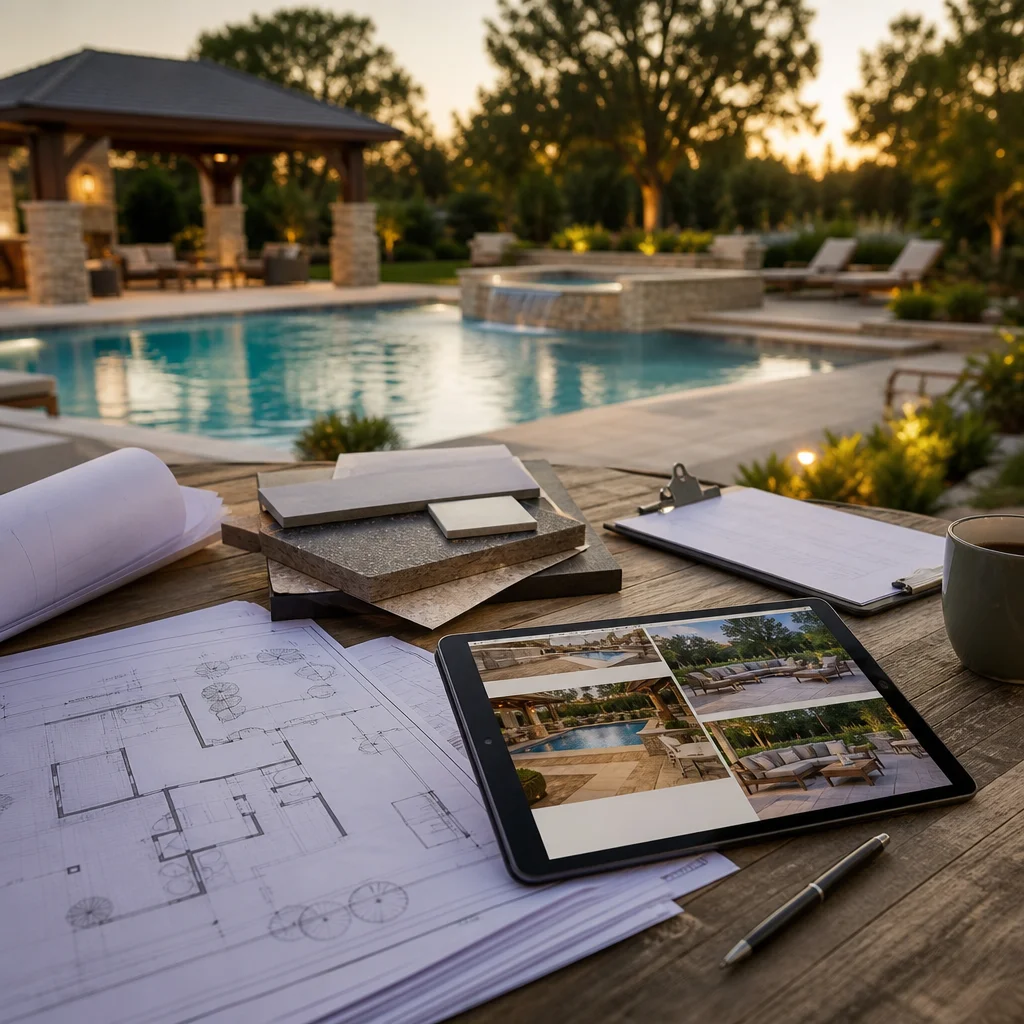
Permitting is often the most underestimated timeline factor. Unlike construction work that you can see progressing weekly, permitting happens behind administrative doors with unpredictable approval schedules.
Nassau and Suffolk counties require permits for pools exceeding certain depths, electrical work, new structures, or significant site modifications. Some jurisdictions require architectural review board approval for properties in planned communities. Waterfront properties face additional environmental and setback requirements. Each jurisdiction has different timelines, and some require sequential rather than parallel approvals.
Professional permit preparation accelerates this process. Working with experienced permit specialists who understand local code requirements and administrative preferences prevents rejections and resubmissions that extend timelines by weeks. We handle this as part of our process, reducing your administrative burden while protecting your schedule.
Building permits typically require inspections at foundation, framing, electrical, and final stages. Coordinating inspection scheduling during construction requires careful planning. Missing an inspection window can delay the next phase by days or weeks.
What to do next: Ask us about permitting requirements specific to your project during initial consultation. We’ll clarify what approvals are needed and realistic timelines for your jurisdiction.
The Value of Comprehensive Project Management
Comprehensive project management is the difference between a project that runs smoothly and one that becomes a source of stress for months. Good project management is invisible when it works; you simply see progress on schedule and within budget.
Our project management includes weekly progress tracking, trade coordination, quality inspections, budget monitoring, and client communication. We anticipate problems rather than reacting to them. When weather delays concrete work, we’ve already adjusted the schedule for dependent trades. When a material shipment delays, we’ve coordinated alternates or adjusted sequence accordingly.
This level of oversight requires dedicated attention and experience. It’s not something a contractor can provide while also actively performing construction work. We manage projects as a distinct function, ensuring nothing falls through administrative cracks.
Quality suffers when project management is weak. Trades work independently rather than in coordination, materials sit exposed when they shouldn’t, and rework becomes necessary when quality isn’t verified during construction. Investing in comprehensive project management actually saves money by preventing these failures.
What to do next: Ask potential contractors about their project management process and who specifically oversees your project day-to-day.
Financing Options for Luxury Outdoor Transformations
Luxury outdoor projects represent substantial investments, and many homeowners explore financing options rather than paying cash. Several options exist depending on your circumstances.
Home equity lines of credit (HELOC) offer flexible borrowing tied to your home’s equity, typically at favorable rates. Home equity loans provide fixed amounts and fixed rates, useful when you have a specific project budget. Unsecured personal loans avoid putting your home at risk but typically carry higher rates.
Some specialty finance companies offer landscaping and outdoor construction financing with terms up to 15 years. These programs often work directly with contractors, simplifying the application and approval process.
We can discuss financing options during your initial consultation and connect you with resources that have worked well for previous clients. Our projects are typically financed through established channels that understand luxury home improvement investments.
What to do next: Determine your preferred financing approach before design finalization. This helps establish your actual budget and prevents designing features you cannot fund.
Avoiding Common Budget Overruns and Delays
The most common budget overruns stem from scope creep (adding features mid-project), design changes during construction, unexpected site conditions, and poor project coordination.
Scope management is your best defense. Finalizing your design before construction begins prevents mid-project changes that require rework and schedule adjustments. We lock down design before permitting, which prevents costly changes later.
Material selections should finalize before ordering, not during installation. Changing your mind about pool finishes or paver colors mid-construction delays the trades dependent on those selections.
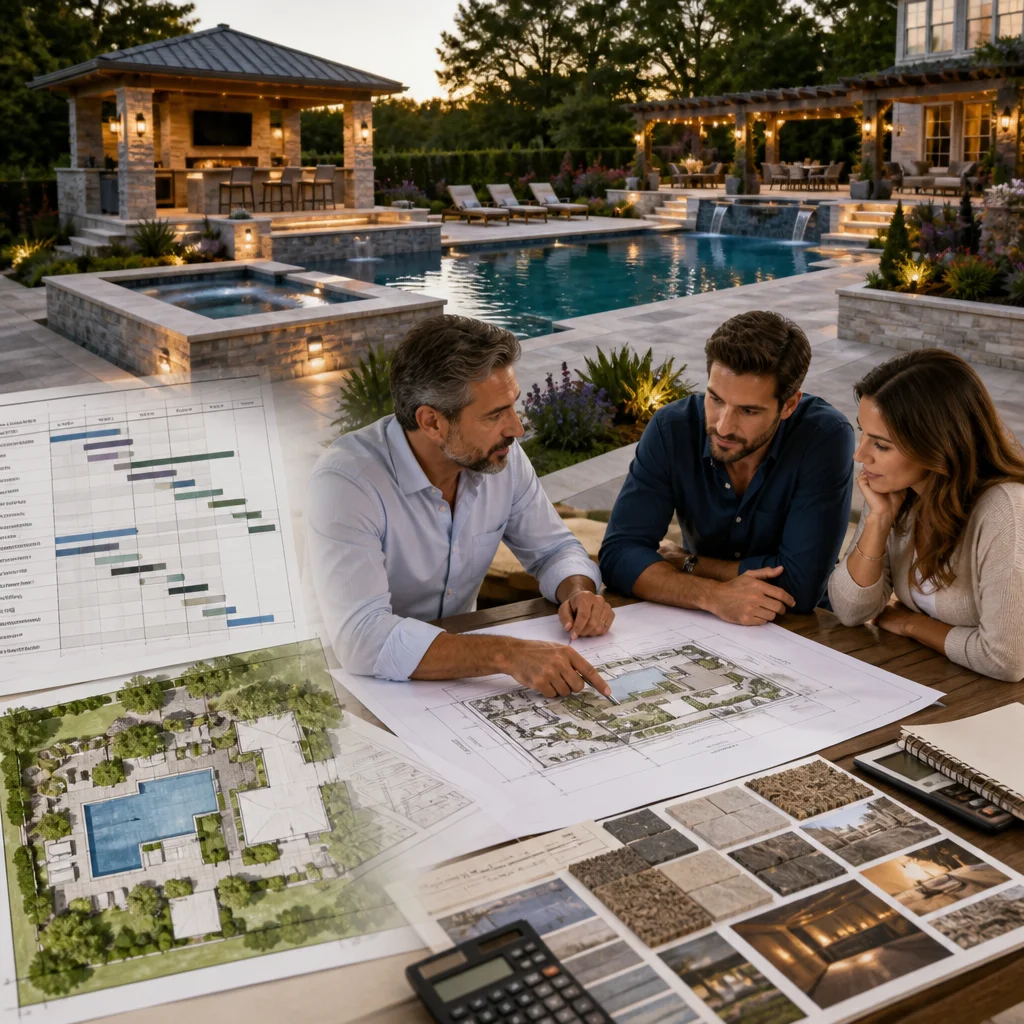
Unexpected site conditions like buried utilities, poor soil conditions, or tree root systems sometimes appear during excavation. Comprehensive site investigation before construction minimizes surprises, but some conditions only reveal themselves during digging. Establishing contingency budget for these situations prevents sticker shock.
Poor trade coordination creates most schedule delays. This is where our full-service approach provides real value; we prevent the coordination failures that plague fragmented project management.
What to do next: Ask us about our change order process and how we manage scope adjustments if they become necessary.
Real-World Examples: Timelines and Investments
A comprehensive Nassau County estate transformation we recently completed included a 15×30 pool with spa, complete landscape redesign, outdoor kitchen with dining area, and new irrigation system. Project scope: 14 weeks. Total investment: $285,000. Permitting and approvals required 4 weeks due to estate setback requirements and architectural review. Construction took 10 weeks without weather delays. The investment delivered a complete outdoor living transformation that increased usable exterior space significantly.
Another project focused on a high-end pool and landscape renovation for a smaller property. Scope: 8 weeks. Investment: $125,000. This project required minimal structural work and simpler permitting, allowing faster execution while still delivering premium finishes.
These examples show how dramatically project scope and site conditions influence both timeline and budget. More complex properties with higher feature integration require longer schedules and larger investments, but they also deliver more comprehensive transformations. You can review our completed work in our outdoor project portfolio to see the range of transformations we deliver.
What to do next: Review completed projects similar in scope to yours. This helps you visualize realistic outcomes and budget ranges for your specific goals.
Getting Your Luxury Outdoor Project Started
Beginning your luxury outdoor living project starts with a detailed consultation where we discuss your vision, evaluate your site, establish your budget parameters, and explain our process. This conversation typically takes 1-2 hours and involves site evaluation and preliminary design discussion.
From there, we develop a detailed proposal outlining design direction, timeline phases, budget breakdown, and our full-service project management approach. If you move forward, we begin design development immediately, working with you to refine materials, features, and final specifications.
The most successful projects start with clear communication about expectations, realistic budgets, and comprehensive planning. We’re equipped to deliver all three, transforming your outdoor space into the premium living environment you envision.
Contact us today to schedule your consultation and begin planning your luxury outdoor transformation.
Contact us today for a free estimate!
Frequently Asked Questions (FAQ)
How long does a typical luxury outdoor project take from start to finish?
We structure our projects in distinct phases that typically span four to eight months for comprehensive transformations. The timeline depends on your scope, whether you’re adding a pool and spa, building an outdoor kitchen, or redesigning your entire landscape with custom masonry work. We manage permitting, material sourcing, and construction sequencing to keep projects on track while maintaining our quality standards.
What should we expect to budget for a high-end outdoor living space?
Our projects range from $75,000 for focused upgrades like custom landscaping or a premium outdoor kitchen, to $500,000 or more for full-estate transformations that include pools, spas, and comprehensive hardscaping. The actual investment depends on your property size, material selections, complexity of construction, and the features you want integrated into your space. We provide detailed budget breakdowns during our initial consultation so you understand where every dollar goes.
Why does our full-service approach help protect both timelines and budgets?
We handle design, permitting, material procurement, and construction under one team, which eliminates coordination gaps that typically cause delays and cost overruns. Because we manage every phase directly, we catch potential issues early, source materials efficiently, and maintain consistent quality control throughout your project. This integrated approach means you work with us as a single point of contact rather than juggling multiple contractors.