
Why Modern Luxury Homeowners Demand Energy Efficiency in Outdoor Spaces
Today’s high-net-worth homeowners recognize that luxury and responsibility aren’t mutually exclusive. The expectation has shifted dramatically in the past five years. When you’re investing $100,000 to $500,000 or more in outdoor living infrastructure, operating costs matter as much as aesthetics do.
Energy efficiency in outdoor spaces directly impacts your bottom line. A poorly designed pool system can cost $3,000 to $5,000 annually in energy expenses alone. Add inefficient irrigation, outdoor heating, and lighting, and that number climbs substantially. Property owners increasingly view sustainable design not as a trend, but as essential financial stewardship.
Beyond personal economics, there’s genuine environmental consciousness at play. Nassau and Suffolk County residents understand their coastal environment and want outdoor spaces that reflect both their values and their investment strategy. An efficiently designed luxury outdoor environment enhances property value, reduces carbon footprint, and delivers the same visual and functional impact as less thoughtful designs.
What to do next: When evaluating outdoor design proposals, ask specifically about energy consumption projections, annual operating costs, and efficiency ratings for major systems.
The Hidden Costs of Inefficient Outdoor Design and Construction
Most luxury homeowners don’t realize the true expense of poor outdoor design decisions until years into ownership. The upfront costs appear reasonable, but ongoing operation becomes a financial drain.
Consider these common inefficiency scenarios:
- Oversized pool circulation systems running continuously waste 30-40% of potential energy
- Irrigation systems on timers without soil moisture sensors waste thousands of gallons annually
- Outdoor kitchens with standard appliances consume double the energy of high-efficiency models
- Generic landscape plantings require excessive water, fertilizer, and maintenance labor
- Inadequate drainage and grading create persistent moisture problems, degrading hardscapes within 5-7 years
Each of these issues compounds. An oversized pool system paired with poor drainage, combined with unoptimized landscaping, can cost homeowners $8,000 to $12,000 annually in wasted resources and premature repairs. A deck or patio expected to last 15 years deteriorates to 8 years, forcing costly replacement sooner than planned.
Inefficient construction methods also shorten asset lifespan. Standard masonry without proper drainage layers, generic stone veneer installations, and inadequate foundation preparation all reduce durability. What appears as a cost savings upfront becomes a substantial liability within a decade.
What to do next: Request detailed operating cost estimates from any contractor, including projections for pool circulation, irrigation, heating systems, and lighting over a 10-year period.
How We Design Energy-Efficient Luxury Outdoor Environments
Our design process begins by understanding your property’s unique characteristics: microclimate, sun exposure, soil composition, water table, and local utility costs. This environmental assessment informs every subsequent decision.
We employ a systems-based approach rather than designing individual components in isolation. Your pool, irrigation, hardscaping, outdoor kitchen, and lighting function as an integrated ecosystem. When these systems work in concert, efficiency multiplies.
Our methodology includes:
- Detailed energy modeling for major installations before construction begins
- Site-specific plant selections that thrive with minimal supplemental water
- Layout optimization to maximize natural shade and minimize heating/cooling demands
- Grading and drainage design that prevents moisture damage and extends material life
- Material selection based on durability, maintenance requirements, and environmental impact
- Smart automation integration planned from the foundation stage, not retrofitted afterward
Each decision carries measurable consequences for long-term performance and operating costs. We design for both immediate visual impact and 20-year sustainability, understanding that luxury should feel effortless across both dimensions.
What to do next: Ask prospective designers whether they conduct site-specific energy modeling and what their typical energy cost reduction benchmarks are compared to standard designs.
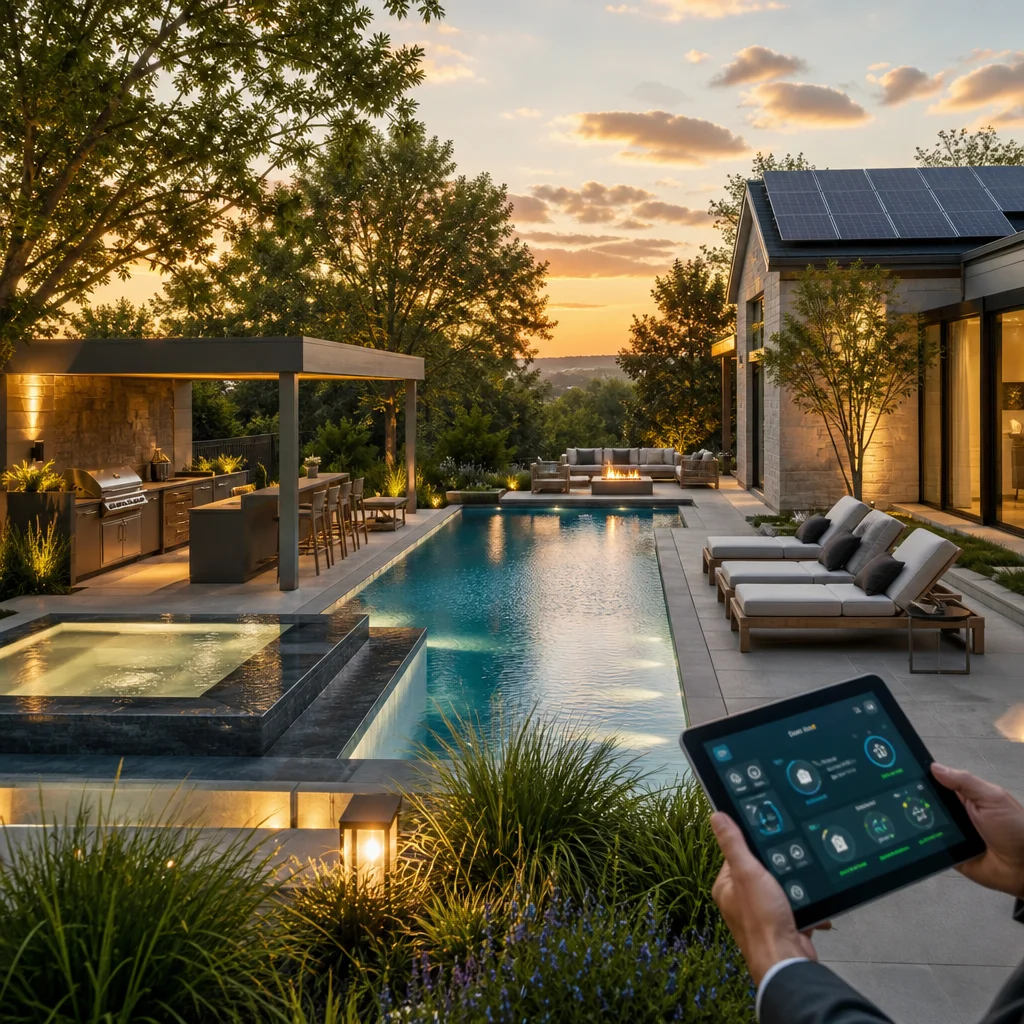
Smart Pool and Spa Systems That Reduce Operating Costs
Pool systems represent the single largest energy consumer in most luxury outdoor environments. A standard 15,000-gallon residential pool operates its circulation pump for 8-12 hours daily, consuming substantial electricity. More critically, inefficient circulation doesn’t adequately maintain water quality, creating chemical imbalances that waste money on treatment.
We specify variable-speed circulation pumps that adjust flow rates based on actual demand rather than running at constant output. These systems reduce energy consumption by 40-60% compared to single-speed alternatives, typically recovering their modest premium cost within 2-3 years through operational savings.
Pool heating deserves equal attention. Instead of resistance heaters or oversized gas burners, we integrate heat pump technology that transfers thermal energy efficiently. Combined with proper pool covers and thermal insulation measures, heat pump systems reduce heating costs by up to 70%.
For spa systems, we design efficient jet circulation with variable-speed technology, timer controls, and insulated covers that prevent unnecessary heat loss. High-end spas equipped with this approach cost approximately $200-300 annually to operate, compared to $600-800 for conventionally equipped units.
Water quality monitoring systems track chemical balance continuously, reducing overcorrection and chemical waste. These smart systems also notify owners when maintenance is genuinely needed, preventing unnecessary professional servicing calls.
What to do next: When evaluating pool contractors, specify that you want variable-speed circulation pumps and heat pump heating systems, and request the anticipated annual operating cost difference.
Strategic Landscape Design and Irrigation for Maximum Efficiency
Landscape design heavily influences water consumption, maintenance labor, and overall property management costs. Generic plant palettes chosen for aesthetic appeal alone ignore climate adaptability and water requirements.
We design landscapes using principle-based plant selection. Native and adapted species thrive in Long Island’s climate with minimal supplemental water once established. A properly designed landscape reduces irrigation demand by 40-50% compared to water-intensive alternatives while requiring less fertilizer and pesticide application.
Our irrigation systems integrate soil moisture sensors and weather intelligence. Rather than operating on fixed schedules, these systems respond to actual conditions. If rain falls, the system recognizes it and adjusts watering cycles accordingly. During cooler months, irrigation frequency decreases automatically.
Microirrigation strategies matter too. Drip systems and targeted spray patterns deliver water directly to plant root zones, minimizing evaporative loss and runoff waste. Compared to traditional spray irrigation across turf areas, these systems reduce water consumption by 30-40% while maintaining superior plant health.
Hardscape design interacts with irrigation efficiency as well. Permeable paving and thoughtful surface grading channel water toward planted areas, reducing unnecessary runoff while supplementing irrigation naturally during rainfall events.
What to do next: Request that your landscape designer provide a water budget calculation showing estimated annual irrigation volume and specify native or climate-adapted plant species for your property.
Advanced Outdoor Kitchen Technology and Performance
Outdoor kitchens have become central gathering spaces in luxury homes, yet most are designed with conventional residential appliances rated for indoor conditions. Exterior-grade equipment operates more efficiently and lasts significantly longer.
We specify commercial-grade outdoor kitchen components engineered for Long Island’s coastal environment. High-efficiency grills distribute heat more evenly while using less fuel. Induction cooktops consume less energy than traditional surfaces and heat faster. Refrigeration units built for outdoor conditions maintain temperature stability more efficiently than standard appliances relocated outside.
Smart appliance integration allows remote monitoring and control. You can preheat your grill from inside, adjust burner temperatures via smartphone, and receive alerts when propane levels are low. More importantly, these systems optimize fuel consumption patterns based on actual usage rather than assuming constant demand.
Countertop and surround material selection affects both durability and maintenance burden. Certain stone selections and finishes resist staining and deterioration better, reducing the need for aggressive cleaning chemicals or frequent sealing that damages materials over time.
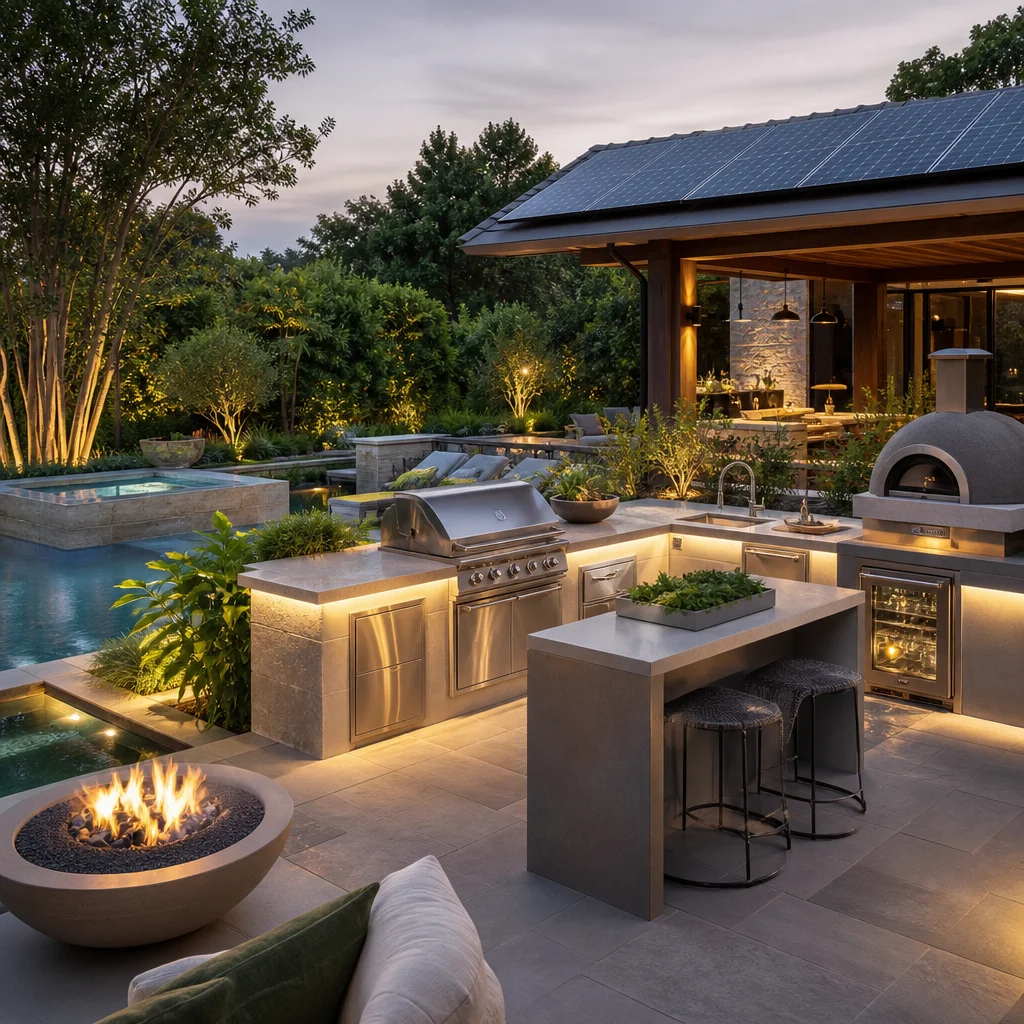
Ventilation design balances cooking efficiency with heat management. Properly designed hood systems remove cooking smoke and moisture without creating excessive air movement that disrupts the dining experience or draws conditioned air from your home.
What to do next: Specify commercial-grade outdoor kitchen equipment with efficiency ratings and ask contractors to detail estimated annual operating costs by appliance type.
Durable Materials and Construction Methods That Last Longer
Material longevity directly correlates with sustainability. A hardscape built to last 20 years generates one-fifth the long-term environmental impact of a similar surface requiring replacement every 10 years.
We select materials based on proven performance in coastal Nassau and Suffolk County environments. High-quality natural stone, engineered composite materials, and marine-grade metals resist salt air corrosion, UV degradation, and freeze-thaw cycles that destroy lesser materials within 5-8 years.
Construction methodology is equally critical. Proper substrate preparation, moisture barriers, and drainage layers protect foundations and extend material lifespan dramatically. A pool deck built with inadequate subsurface drainage develops cracks and surface deterioration within years. The same deck built with proper drainage and material specifications remains pristine for 20+ years.
Masonry and stone veneer work requires expert technique. Inadequate mortar composition, improper sealing, and poor flashing lead to water intrusion and structural failure. Superior craftsmanship and material specifications prevent these issues entirely, preserving structural integrity and aesthetic value across decades.
Maintenance accessibility affects both cost and durability. When systems are designed so that filters, pumps, and equipment remain accessible for routine maintenance, they receive better care and operate more reliably. Hidden or difficult-to-reach components are often neglected, leading to premature failure.
What to do next: Ask contractors about material warranties, their subsurface preparation methods, and whether they use marine-grade hardware and sealants appropriate for coastal environments.
Smart Lighting and Water Management Solutions We Integrate
Outdoor lighting consumes surprising amounts of energy while often creating overlighting that diminishes the aesthetic experience. We design lighting strategically, creating ambiance while minimizing electrical demand.
LED technology is now standard in our projects, but specification matters considerably. Different color temperatures, beam angles, and control systems optimize specific areas. Task lighting near cooking and dining areas uses brighter output, while ambient lighting relies on lower intensity and warmer color temperatures that create desired atmosphere without waste.
Smart controls automate lighting based on occupancy, time of day, and seasonal changes. Systems can adjust brightness gradually at dusk, responding naturally to daylight transitions. Motion sensors eliminate lighting empty spaces, and smartphone controls allow manual override when entertaining.
Water management extends beyond irrigation. Rainwater harvesting systems capture roof runoff for irrigation use, reducing municipal water consumption significantly. Properly sized cisterns and filtering systems make this water available throughout dry seasons, reducing the need for supplemental municipal supply.
Drainage systems designed thoughtfully prevent water from becoming a liability. Strategic grading channels moisture away from structures, preventing foundation damage and reducing standing water that breeds mosquitoes and creates maintenance problems.
What to do next: Specify LED lighting with programmable controls and ask whether your contractor can integrate rainwater harvesting systems appropriate for your property’s size and roof area.
The Long-Term Value of Efficient Outdoor Living Investments
Energy-efficient outdoor design delivers returns across multiple dimensions. The most obvious benefit is reduced operating costs, but the value extends far beyond annual utility bills.
Property value appreciation accelerates when outdoor spaces are expertly designed and sustainably built. Luxury homes with premium outdoor living environments command higher sale prices and attract broader buyer pools. Appraisers recognize quality construction and efficiency investments, valuing them appropriately in estate assessments.
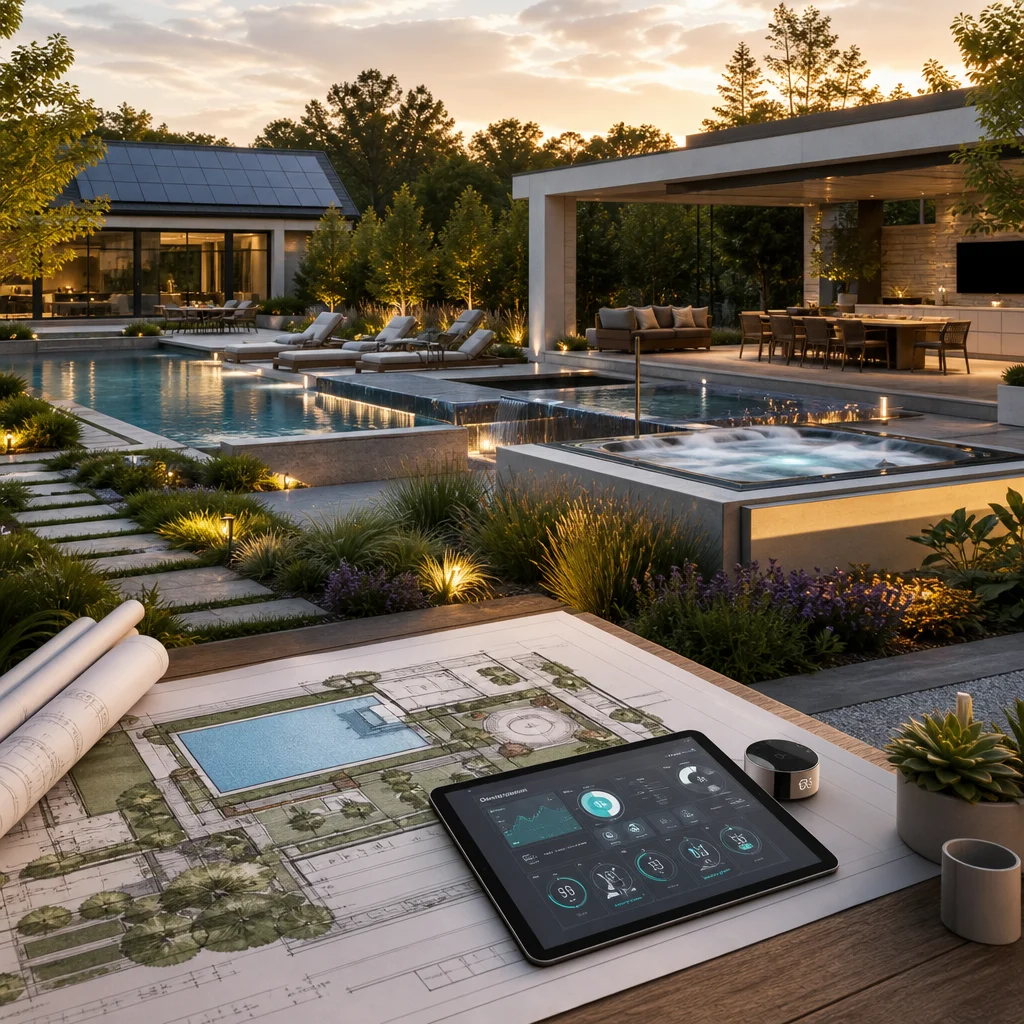
Reduced maintenance demand represents tangible economic benefit that compounds annually. An efficiently designed landscape might require 60 hours of annual maintenance, while an inefficient alternative demands 120 hours. Over a decade, that difference equals $12,000 to $24,000 in labor costs, assuming $100-200 per hour for professional service.
Material longevity directly translates to avoided replacement costs. A hardscape that remains beautiful for 20 years versus requiring replacement at year 10 saves $50,000 to $150,000 depending on the project scope. Multiply this across multiple components, and the cumulative savings become substantial.
Insurance and resale considerations merit attention as well. Properties with sustainable building practices and documented energy efficiency often qualify for better insurance rates. When you eventually sell, documentation of these investments demonstrates responsible stewardship and justifies premium pricing.
What to do next: Have your contractor provide a detailed cost-benefit analysis showing operating cost savings, estimated maintenance reduction, and expected lifespan for major components.
Our Comprehensive Approach to Sustainable Luxury Outdoor Transformation
We approach every project as a comprehensive transformation rather than a collection of individual tasks. From initial site assessment through final construction and commissioning, we maintain focus on integrated performance and long-term value.
Our design process considers your lifestyle, entertaining patterns, aesthetic preferences, and financial objectives alongside environmental impact and operating efficiency. We believe these considerations complement rather than contradict one another.
We manage projects from conception through completion, ensuring that design intent translates accurately into construction reality. Our in-house expertise spans pool systems, custom masonry, outdoor kitchens, landscaping, irrigation, and general construction, allowing coordinated decision-making that independent contractors cannot provide.
Quality control throughout construction prevents the costly mistakes that plague projects managed piecemeal. When your pool contractor, landscape designer, and hardscape builder don’t coordinate, integration failures occur. We ensure every element works in concert to deliver both visual magnificence and operational efficiency.
Our commitment extends beyond project completion. We provide detailed operational guidance, helping you understand how your systems function and how to optimize them for your specific circumstances. This knowledge transfer empowers you to make informed decisions about maintenance and upgrades over time.
Visit our portfolio to see examples of how we’ve transformed luxury outdoor environments across Long Island, combining aesthetic excellence with genuine sustainability and efficiency.
What to do next: Schedule an on-site consultation where we can assess your property, understand your vision, and discuss how integrated design can deliver both the luxury outdoor environment you desire and the operational efficiency that protects your long-term investment.
Contact us today for a free estimate!
Frequently Asked Questions (FAQ)
How do we incorporate energy efficiency into luxury outdoor designs without compromising aesthetics?
We integrate sustainable performance directly into our design philosophy rather than treating it as an afterthought. Our approach combines high-efficiency pool systems, smart irrigation controls, and premium durable materials that reduce long-term operational costs while maintaining the architectural excellence our clients expect. We work with advanced outdoor kitchen technology and LED lighting solutions that enhance ambiance while minimizing energy consumption across your entire outdoor environment.
What kind of long-term savings can homeowners expect from our energy-efficient outdoor installations?
Our clients typically see measurable reductions in pool heating, water usage, and landscape maintenance expenses within the first year of operation. Beyond immediate utility savings, our durable construction methods and efficient systems require less frequent repairs and replacements, protecting your investment for decades. The combination of smart automation, high-performance equipment, and strategic landscaping design creates compounding savings that improve your property’s overall operational efficiency.
How do we handle the entire project from concept to completion?
We manage every phase as a full-service firm, starting with comprehensive design that evaluates your specific outdoor needs and efficiency goals. Our team oversees all construction, integrations of smart systems, and landscaping implementation to ensure seamless coordination and superior results. We remain involved throughout to guarantee that every element performs as designed and meets the luxury standards we set for Nassau and Suffolk County estates.