
Why Saltwater Environments Demand Specialized Outdoor Design
Waterfront properties on Long Island command premium valuations, but that coastal position brings environmental pressures most inland estates never face. Salt spray, corrosive air, intense UV exposure, and high humidity conspire to degrade ordinary outdoor materials and finishes at an accelerated pace. Luxury homeowners in Nassau and Suffolk counties understand that proximity to the Atlantic Ocean requires more than aesthetic appeal; it demands engineered resilience.
At Monarc Creative Group, we’ve spent years perfecting coastal luxury outdoor design specifically for high-net-worth properties in saltwater environments. We don’t apply standard design principles and hope they hold up. Instead, we approach every coastal project with material science, strategic placement, and protective systems built into the initial concept. The result is outdoor living spaces that maintain their elegance and structural integrity for decades, not years.
Saltwater air poses challenges that many general contractors underestimate. Salt crystals corrode exposed metal fasteners, accelerate wood decay, and discolor stone surfaces within months of improper installation. Standard stainless steel grades oxidize faster near the ocean. Even “weather-resistant” lumber can fail prematurely if not treated with coastal-specific protective coatings.
The physics is straightforward: salt spray deposits microscopic particles on every surface. These particles absorb atmospheric moisture and create electrolytic corrosion cycles that attack metals, wood, and certain stone types. UV radiation compounds the damage by breaking down protective sealants and finishes. Combined with salt-laden winds and high humidity, a luxury outdoor kitchen or pool deck designed without these factors in mind will show deterioration within 18 to 24 months.
We design coastal spaces from the ground up recognizing these environmental stressors. That means selecting materials rated for high-salt environments, using corrosion-resistant hardware throughout, positioning structures to minimize direct salt spray exposure, and specifying premium sealants and coatings engineered for saltwater conditions.
What to do next: If you own a waterfront property, audit your current outdoor structures for exposed metal fasteners, unsealed wood, or non-marine-grade materials. These are the first failure points.
The Challenge of Maintaining Luxury Aesthetics Near Coastal Areas
High-end outdoor design already demands visual precision: clean lines, harmonized materials, balanced spatial flow, and finishing details that convey quality. Add coastal resilience into that equation, and the design challenge multiplies. Many corrosion-resistant materials available today carry industrial aesthetics or visible protective coatings that clash with luxury residential expectations.
Your waterfront estate should look timeless and refined, not like a marine facility. That means sourcing premium materials that happen to perform in saltwater conditions, not settling for mediocre options simply because they resist corrosion. Stone veneers must maintain their color and patina without visible salt deposits. Pool finishes need to radiate sophistication while enduring chemical exposure and salt spray. Outdoor kitchens require materials that feel substantial and curated, not temporary or utilitarian.
We navigate this tension by partnering with manufacturers who produce high-performance materials specifically designed for luxury coastal applications. Premium porcelain pavers that resist salt etching, architectural stone with superior salt-fade resistance, marine-grade stainless steel with refined finishes, and high-performance wood species treated with invisible protective systems all exist in the luxury market. The key is knowing where to source them and how to integrate them into cohesive, elegant designs.
What to do next: When evaluating outdoor design proposals, ask whether materials were selected specifically for coastal conditions or whether standard luxury options are being adapted. The distinction reveals whether your designer understands saltwater-specific requirements.
Our Comprehensive Approach to Coastal Outdoor Excellence
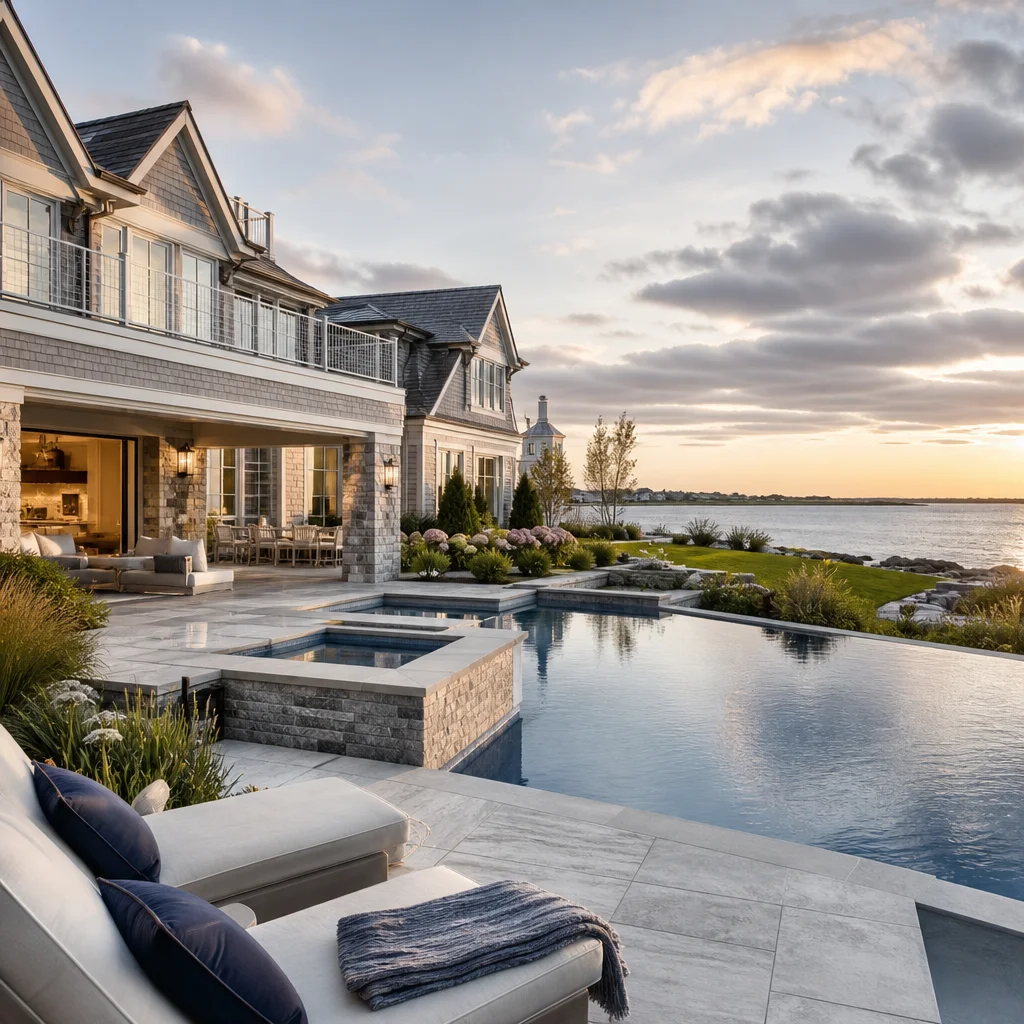
We treat coastal luxury outdoor design as an integrated system rather than a collection of independent features. Your pool, spa, outdoor kitchen, landscaping, irrigation, hardscaping, and custom carpentry all influence each other environmentally and aesthetically. A misstep in one area can compromise the durability and beauty of adjacent spaces.
Our process begins with a thorough site analysis. We map wind patterns, salt spray zones, sun exposure, drainage patterns, and proximity to the shoreline. This data informs material selections, structural orientations, and drainage strategies. We then develop a unified design that accounts for coastal resilience across every element.
Our team manages both design and construction, eliminating the communication gaps that plague projects with separate architects and contractors. We’re accountable for the entire outcome: aesthetic vision, structural performance, and long-term durability. That accountability drives us to specify the right materials, use proper installation techniques, and oversee quality control at every phase.
A typical coastal project with us involves:
- Comprehensive site and environmental assessment
- Architectural design incorporating coastal resilience principles
- Material sourcing from premium manufacturers rated for saltwater exposure
- Custom construction with corrosion-resistant fasteners and marine-grade sealants
- Comprehensive irrigation and drainage systems engineered for coastal hydrology
- Final protection treatments and preventative maintenance protocols
What to do next: Request a site consultation where a designer can evaluate your property’s specific coastal exposure and discuss how those conditions should shape your design strategy.
Material Selection for Long-Lasting Coastal Beauty
Material selection determines whether your luxury outdoor space remains beautiful or deteriorates into a maintenance burden. In coastal environments, we prioritize materials in this hierarchy:
Marine-grade stainless steel is non-negotiable for any hardware, fasteners, or structural components. Standard stainless (304 grade) corrodes in high-salt environments. We specify 316-grade stainless steel, which contains molybdenum for superior corrosion resistance. It costs more upfront but eliminates rust stains and structural failures that would require costly replacements.
Premium stone should be selected for both beauty and durability. Some stones absorb salt more readily than others. We favor dense, non-porous options like granite, certain basalts, and premium porcelain pavers designed for coastal applications. These resist salt etching and maintain their aesthetic appeal over decades.
Pressure-treated lumber and tropical hardwoods handle moisture better than standard wood species. We often specify ipe, cumaru, or other dense tropical hardwoods for pool decking and outdoor structures. These woods resist rot, resist insect damage, and endure salt exposure far longer than cedar or composite materials.
High-performance coatings protect exposed wood and metal surfaces. We use marine-grade sealants rated for saltwater environments, often applying multiple protective layers on critical surfaces like outdoor kitchen countertops and pool equipment enclosures.
What to do next: When reviewing material specifications, confirm that hardware is 316-grade stainless, stone selections are rated for high-salt environments, and all finishes are marine-grade. These three factors alone eliminate 80% of coastal deterioration problems.
Advanced Pool and Spa Solutions for Saltwater Properties
Saltwater pools and spas are increasingly popular on Long Island, but they introduce unique design and maintenance challenges. Saltwater chlorination systems reduce chemical irritation and equipment deterioration compared to traditional chlorine, yet they still demand specialized design and material selections.
We design saltwater pools with materials engineered to withstand both the salt chlorination process and ambient salt spray. Saltwater systems gradually increase pH and calcium hardness if not properly balanced, accelerating deterioration of substandard pool finishes. We specify premium pool finishes like advanced epoxy coatings or superior plaster formulations that resist this chemistry while maintaining visual brilliance.
Deck materials surrounding saltwater pools face double exposure: splashed saltwater from the pool plus ambient salt spray. We use marine-grade pavers and anti-slip surfaces that resist both corrosion and algae growth. Drainage design becomes critical; proper slope and subsurface drainage prevent salt accumulation in seams and joints.
Spa features demand equal attention. Jets, circulation systems, and equipment housings must use corrosion-resistant materials. We design spa areas with protective structures or positioning that minimizes direct salt spray exposure to mechanical components.
What to do next: If you’re considering a saltwater pool, consult with a designer who has managed saltwater installations in coastal environments. Ask about their experience with equipment longevity and deck maintenance protocols specific to saltwater properties.
Custom Masonry and Stone Work That Withstands Coastal Conditions
Masonry and stone represent the visual and structural foundation of luxury outdoor spaces. Poorly executed masonry fails rapidly in coastal environments; quality craftsmanship endures for generations.
We specify only stone varieties proven to resist salt etching and deterioration. Dense granites, engineered porcelain pavers with low water absorption, and premium limestone varieties from suppliers with coastal expertise are our standard choices. We avoid porous or highly absorbent stones that trap salt crystals and deteriorate prematurely.
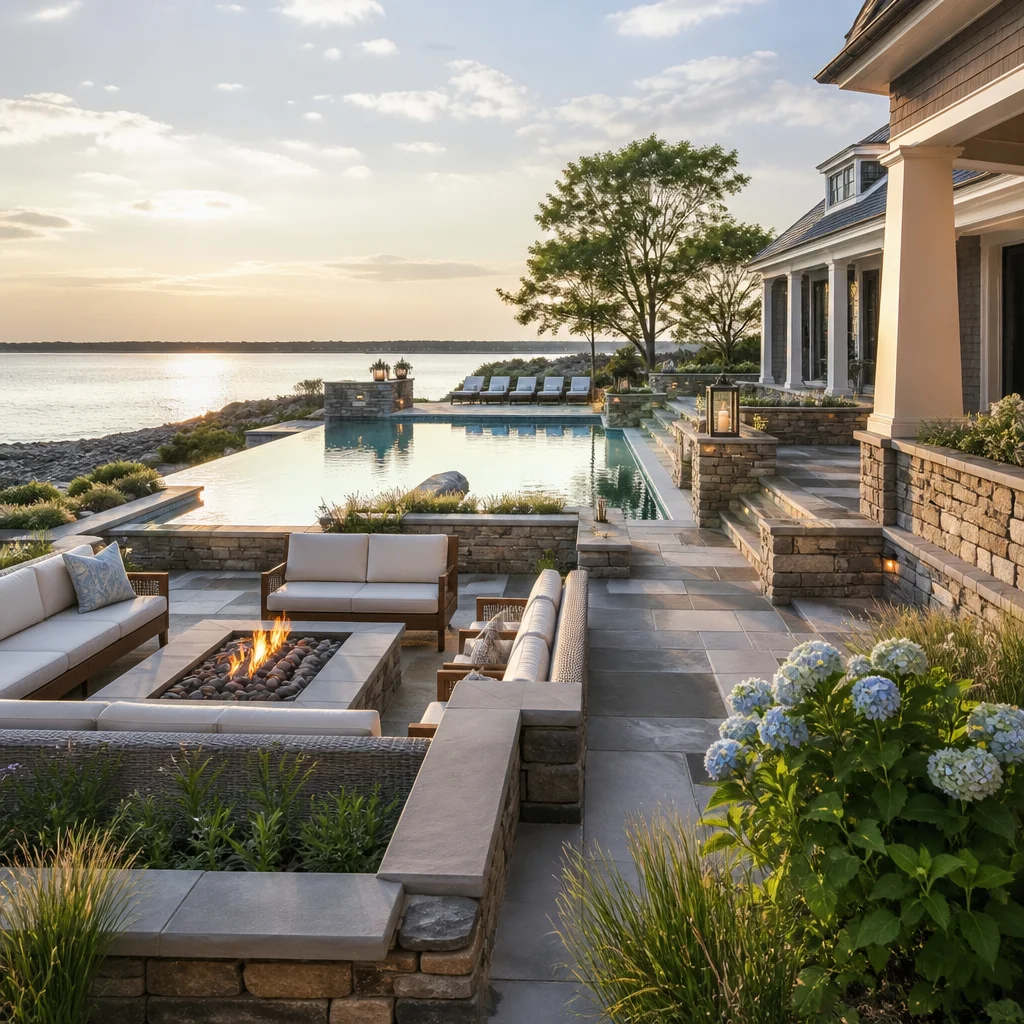
Installation technique matters equally. Masonry joints must use marine-grade mortar formulations. We slope all surfaces to direct water away from structures and seams. Proper drainage behind stone veneers prevents water accumulation that accelerates corrosion and structural failure.
Custom veneer work receives additional protection through high-performance sealants applied during installation. These sealants are invisible to the eye but dramatically improve the stone’s resistance to salt spray and UV damage.
What to do next: Have any existing masonry inspected by a professional familiar with coastal properties. Look for white salt deposits on stone surfaces, mortar deterioration, or moss growth in shaded areas. These are early indicators that sealant protection needs renewal.
Outdoor Kitchen and Living Spaces Engineered for Salt Air
Outdoor kitchens are centerpieces of luxury estates, yet they represent some of the most challenging coastal construction projects. Stainless steel appliances, granite countertops, wood cabinetry, and electrical systems all face salt spray exposure.
We design outdoor kitchens with materials and positioning that collectively minimize environmental stress. Countertops use marine-grade granite or engineered surfaces rated for saltwater exposure. We slope all horizontal surfaces for proper drainage. Stainless steel components are 316-grade minimum. Wood elements, if included, use tropical hardwoods with marine-grade finishes.
Structural enclosures around outdoor kitchens can shield equipment from direct salt spray while maintaining open, elegant aesthetics through strategic roof overhangs, pergola designs, and partial wall configurations. These protective structures don’t sacrifice the luxury outdoor living experience; they extend it.
Electrical systems in coastal outdoor kitchens must use GFCI protection and marine-grade wiring enclosures. Proper grounding and corrosion-resistant conduit prevent safety failures and equipment damage.
What to do next: If planning an outdoor kitchen on a waterfront property, request design sketches showing how the structure will shield equipment from salt spray. Ask about material specifications and long-term maintenance protocols specific to saltwater exposure.
Irrigation and Landscaping Systems Built for Coastal Climates
Coastal soils and vegetation face distinct pressures: salt spray damage to foliage, salt accumulation in soil reducing plant vitality, higher evaporation rates, and specific plant species that tolerate these conditions.
We design irrigation systems engineered for coastal hydrology. Freshwater irrigation is critical on waterfront properties; saltwater systems would accelerate soil salinization. We specify irrigation components rated for corrosion resistance and design systems that deliver water efficiently to salt-tolerant plantings.
Plant selections emphasize species proven to withstand salt spray, wind exposure, and sandy coastal soils. Native and adapted species often perform better than typical landscape plants. Beach plums, bayberry, beach grass, and rugosa roses thrive in high-salt environments while maintaining ornamental value.
Soil amendments and proper mulching reduce salt accumulation and improve plant establishment. We often incorporate leaching strategies into the irrigation design to flush excess salts from the root zone.
What to do next: Evaluate your current landscaping for signs of salt damage: foliage browning on ocean-facing sides, stunted growth, or plant failure despite adequate water. These indicate that plant selection or irrigation design needs adjustment for coastal conditions.
Design Integration That Enhances Your Waterfront Estate Value
Cohesive coastal design elevates your property’s market value and your family’s daily experience. When pools, kitchens, landscaping, and hardscaping work together as an integrated system, the outdoor space feels intentional, luxurious, and enduring.
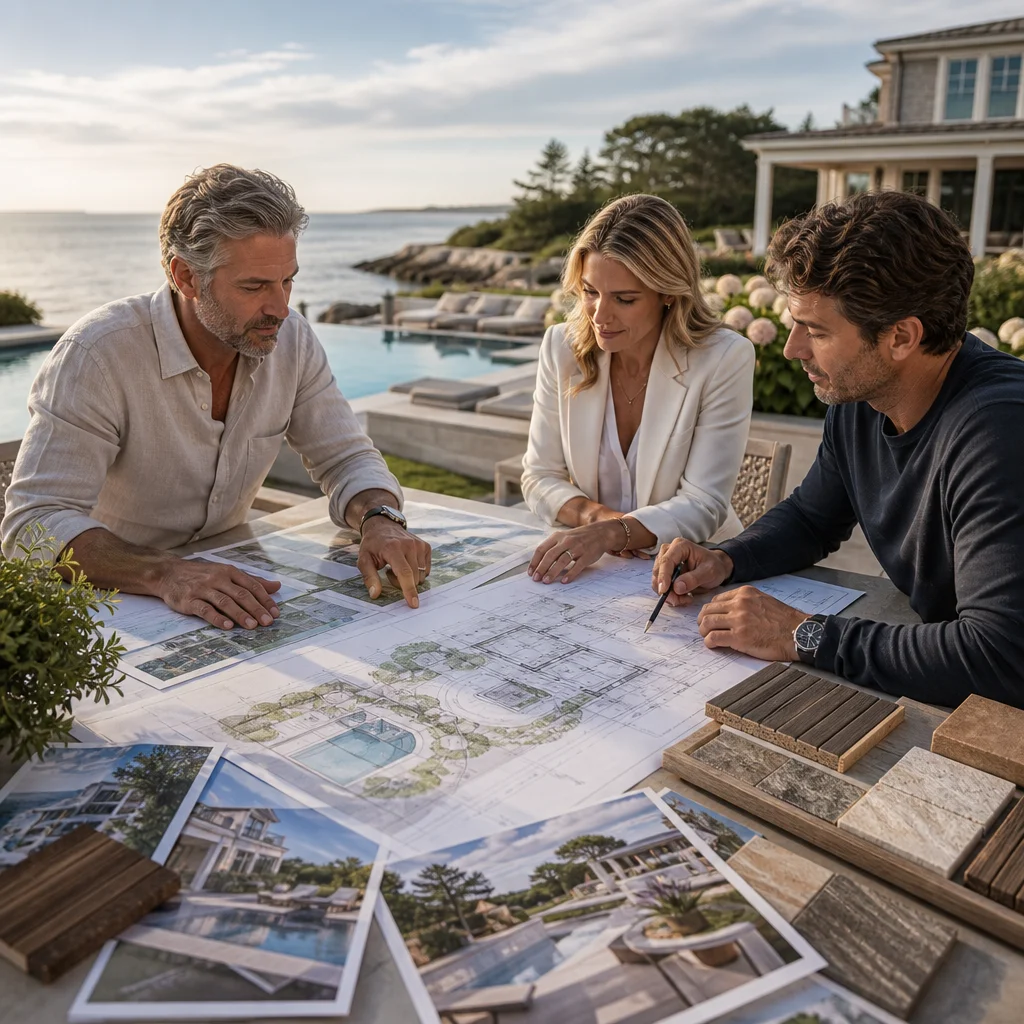
We develop unified design narratives that flow across your entire property. Material palettes are consistent. Spatial flow creates natural gathering areas. Sightlines emphasize the best views while protecting sensitive equipment from environmental stress. Lighting design enhances evening ambiance while accommodating electrical durability in coastal conditions.
This integration extends to maintenance protocols. We develop customized care schedules that keep your outdoor spaces in pristine condition. Preventative treatments, seasonal inspections, and strategic repairs are far less costly than reactive restoration after damage occurs.
What to do next: Photograph your property from multiple vantage points and identify visual focal points and gathering areas. Ask your designer how the proposed outdoor improvements will reinforce these natural spatial relationships while incorporating coastal resilience.
Why Our Full-Service Model Delivers Superior Coastal Results
Many property owners hire separate designers, engineers, and contractors for coastal projects. This fragmentation creates accountability gaps and communication breakdowns. A designer specifies elegant materials without understanding installation realities in saltwater environments. A contractor prioritizes construction efficiency over long-term durability. The homeowner discovers problems months after completion.
Our full-service approach aligns design vision, material expertise, construction excellence, and long-term durability. We’re responsible for the entire outcome. That accountability drives us to make decisions prioritizing your property’s long-term beauty and function over short-term cost savings.
We manage design, sourcing, permitting, construction, and post-project maintenance protocols. Our team includes specialists in coastal design, masonry, pool and spa installation, custom carpentry, landscaping, and irrigation systems. This integrated expertise means every decision considers how it affects adjacent systems and long-term performance.
Waterfront luxury outdoor design is our specialty. We understand Nassau and Suffolk county properties, local climate patterns, regulatory requirements, and the specific expectations of high-net-worth homeowners seeking turn-key coastal solutions.
What to do next: Contact us for a consultation. We’ll evaluate your property’s coastal exposure, discuss your vision for the outdoor space, and outline how our full-service approach transforms your waterfront estate into a resilient, elegant retreat designed to appreciate in value and beauty for decades to come.
For further reading: Monarc Creative portfolio.
Contact us today for a free estimate!
Frequently Asked Questions (FAQ)
Why does our coastal outdoor design approach differ from standard luxury landscaping?
We specialize in construction and design that specifically addresses the corrosive impact of saltwater air on premium materials and systems. Our approach combines material selection, drainage engineering, and maintenance protocols tailored to Long Island’s coastal environment, ensuring your outdoor spaces maintain their elegance and functionality for decades rather than requiring constant repairs.
What materials do we recommend for coastal properties, and why?
We select materials based on proven performance in salt air conditions, including marine-grade stainless steel, salt-resistant stone varieties, and specialized pool finishes that resist chlorine and saltwater degradation. Our masonry work incorporates proper sealing techniques and quality stone that won’t deteriorate, while our irrigation systems use corrosion-resistant components and salt-tolerant plant selections that thrive near the ocean.
How does our full-service model protect my investment in coastal outdoor construction?
We manage every aspect of your project from design through completion, ensuring consistency in material choices, installation standards, and long-term durability planning. By handling design, project management, and construction in-house, we maintain accountability throughout and can implement protective measures during installation that many fragmented teams overlook.