1. Premium Cooking Appliances and Built-In Grills
A premium outdoor kitchen transforms how your family entertains and enjoys your estate. Yet most homeowners underestimate what it takes to create a space that’s both luxurious and functional year-round. The difference between a standard outdoor setup and a truly grand culinary environment comes down to seven critical design elements that work together seamlessly.
We’ve spent years designing and building high-end outdoor kitchens across Long Island, and we’ve learned that luxury isn’t just about aesthetics. It’s about understanding how every component serves your lifestyle while standing up to the coastal climate. Whether you’re hosting intimate dinners or large-scale gatherings, the right design decisions elevate your entire outdoor living experience.
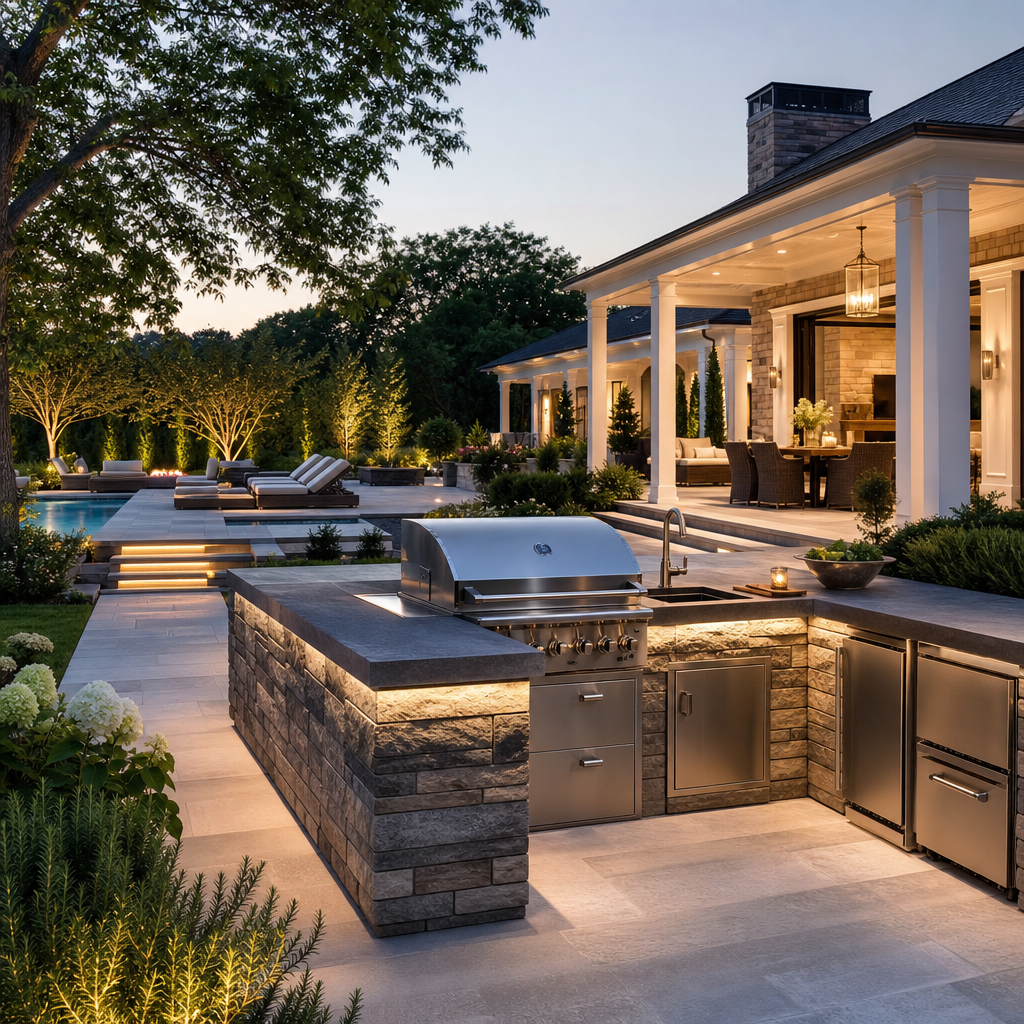
Your grill is the centerpiece of outdoor cooking, and selecting the right one sets the tone for everything else. Commercial-grade built-in grills deliver superior heat distribution, durability, and cooking precision that standard models simply can’t match. When we design outdoor kitchens, we specify grills with multiple burner zones, infrared searing capabilities, and thick stainless steel construction designed to handle professional-level demands.
The best outdoor kitchens don’t rely on a single appliance. We typically integrate a primary grill with a side burner for sauces, a smoker box for slow-cooking, and often a wood-fired pizza oven for authentic flavor and entertainment value. Each appliance serves a specific purpose in your culinary workflow.
Materials matter enormously here. Look for 304 stainless steel components rather than 430 grade, as they resist salt air corrosion far better. We recommend investing in brands that offer both aesthetic refinement and proven reliability in coastal environments.
Actionable takeaway: When selecting your primary grill, verify it has independently controlled burner zones, heavy-duty grates, and a warranty that covers outdoor installation in your climate zone. Test the ignition system and ask about replacement parts availability before finalizing.
2. Functional Layout and Workflow Planning
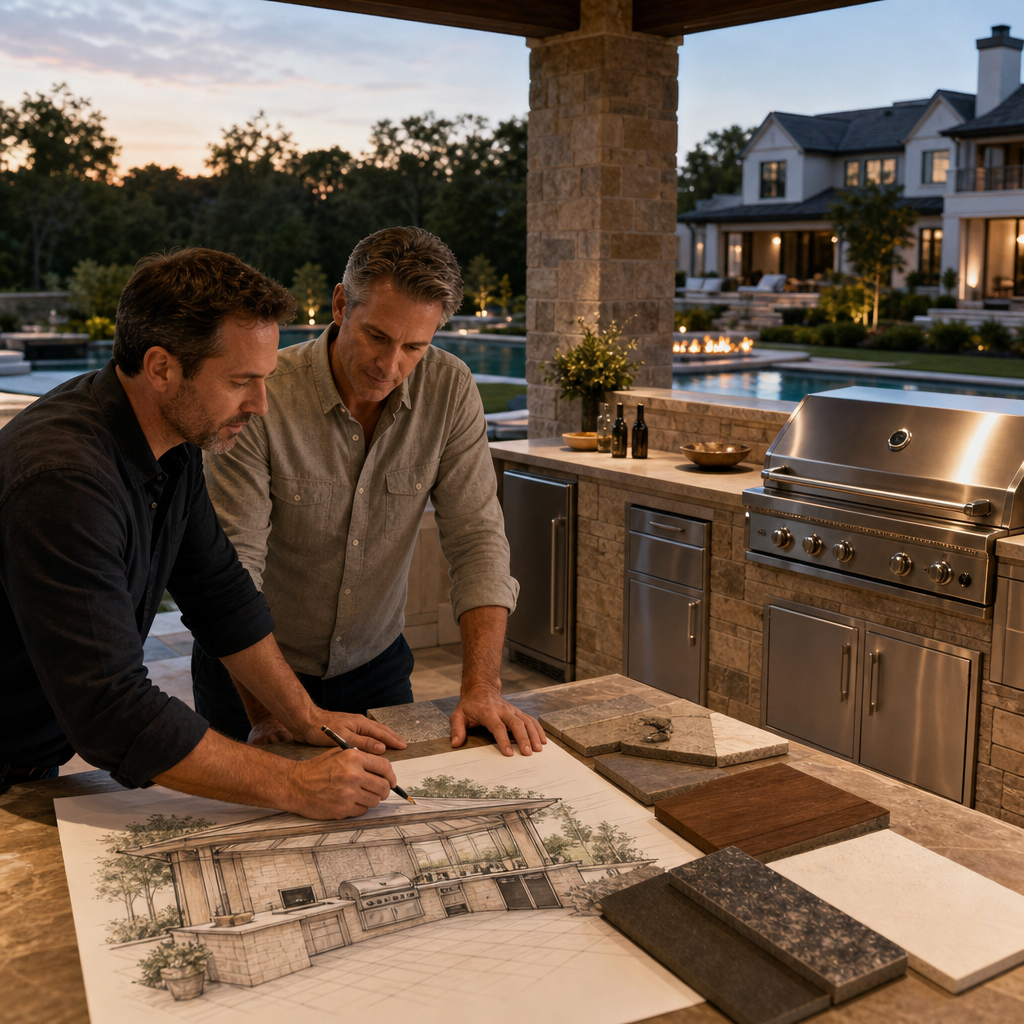
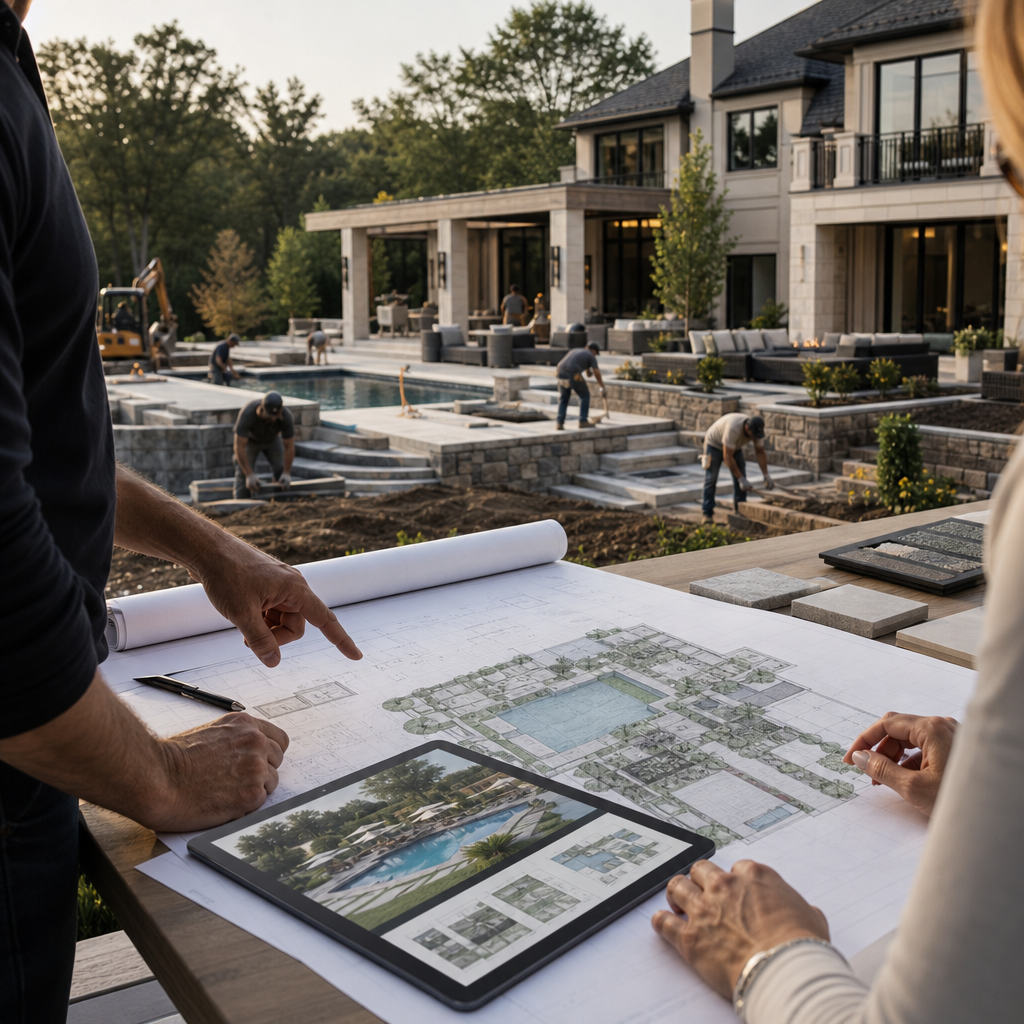
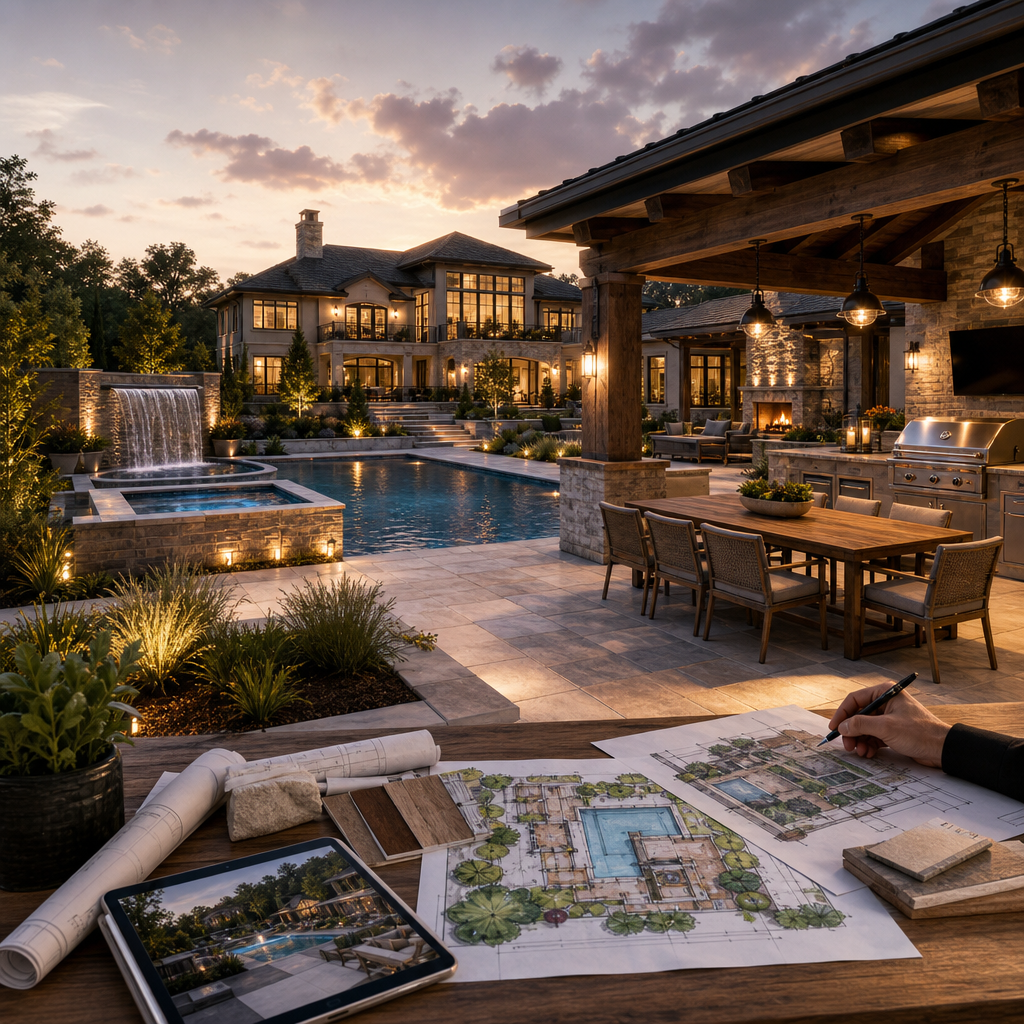
Poor layout ruins even the most expensive outdoor kitchen. We design around a proven workflow: prep zone, cooking zone, plating zone, and serving area. This sequence minimizes unnecessary movement and keeps your space organized during entertaining.
Spacing is critical. Your grill should sit 24-36 inches from prep surfaces, allowing comfortable reach while you’re cooking. Counter depth typically runs 24-30 inches to match indoor kitchens, but your total counter length depends on how much prep work you’ll handle outdoors. A 10-foot run gives you flexibility; anything shorter feels cramped once you’re actively cooking.
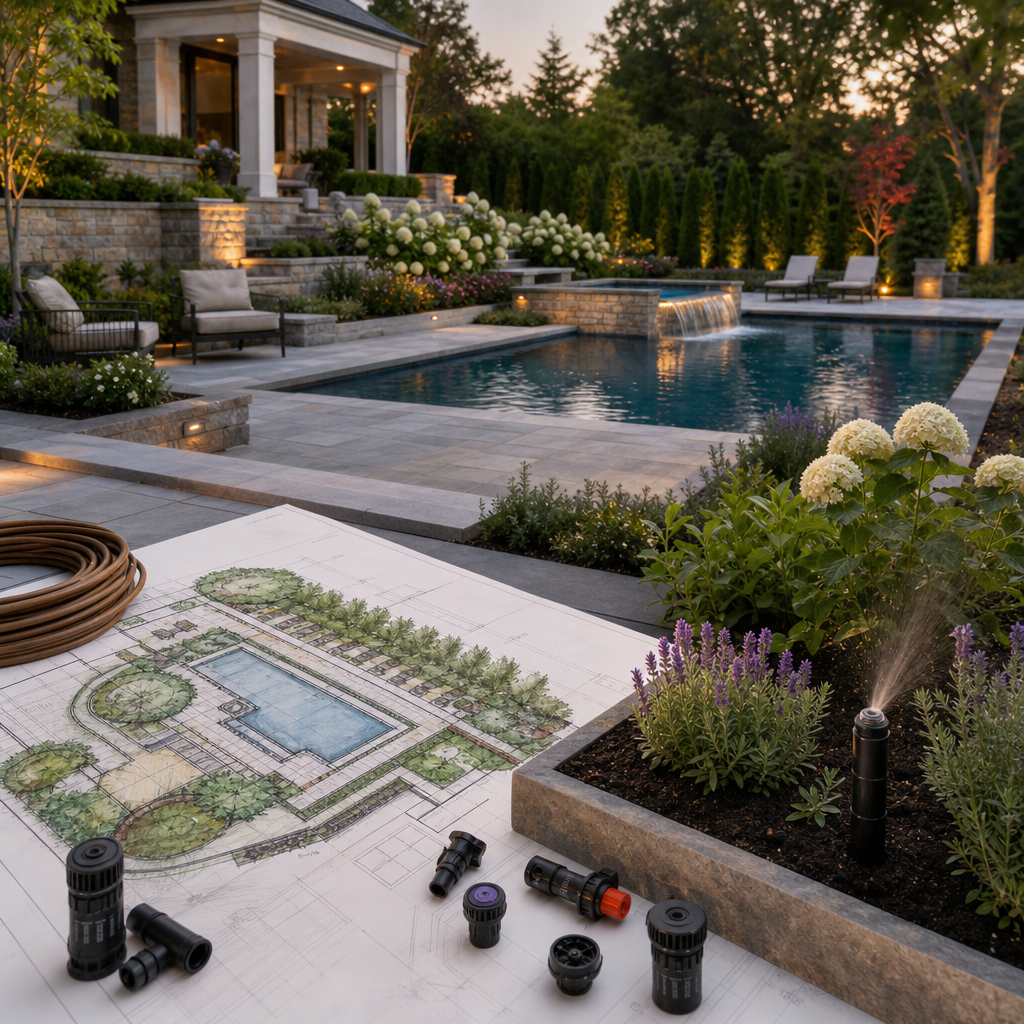
We also consider traffic flow. Position your bar seating and lounge areas so guests don’t walk directly behind someone who’s cooking. Sight lines matter too, and your grill should face toward your entertaining area, not toward a fence or wall. When we plan layouts, we account for how natural light moves across your space throughout the day and season, which influences both functionality and ambiance.
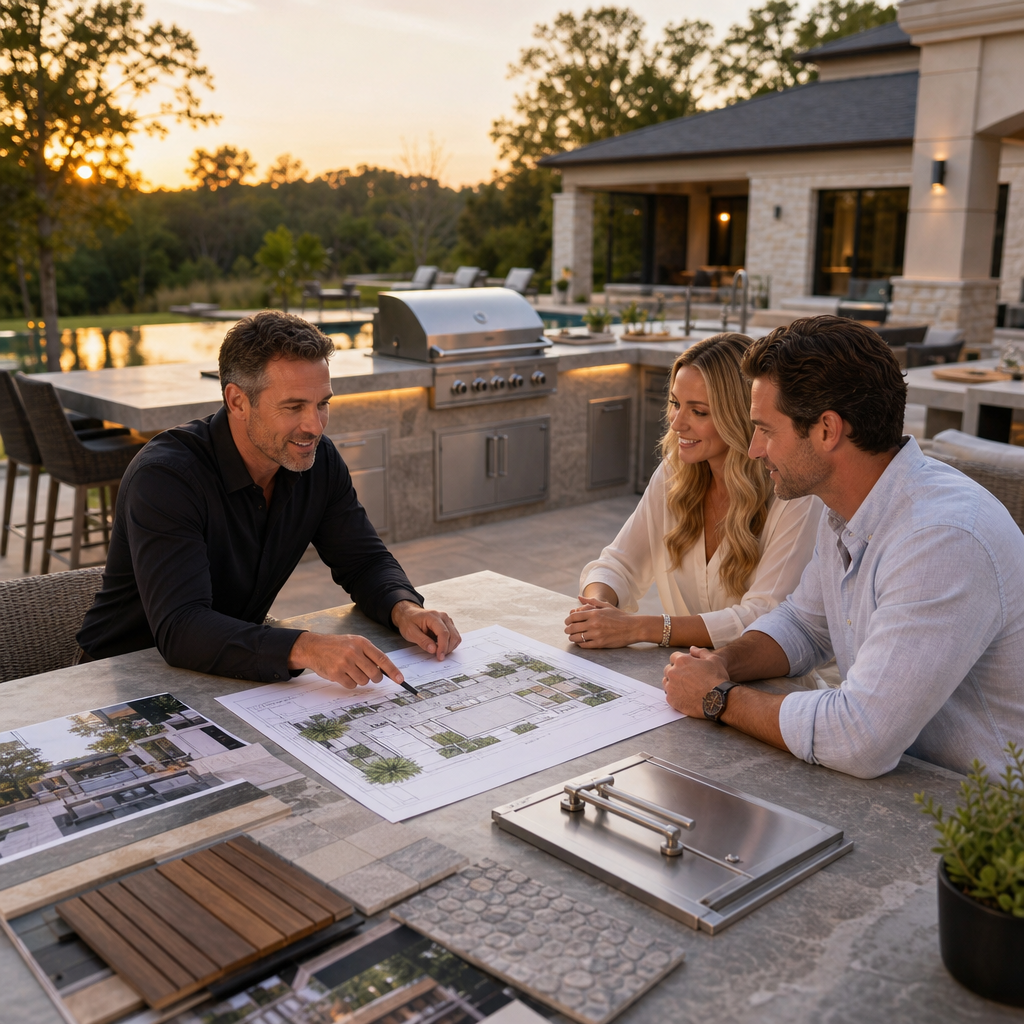
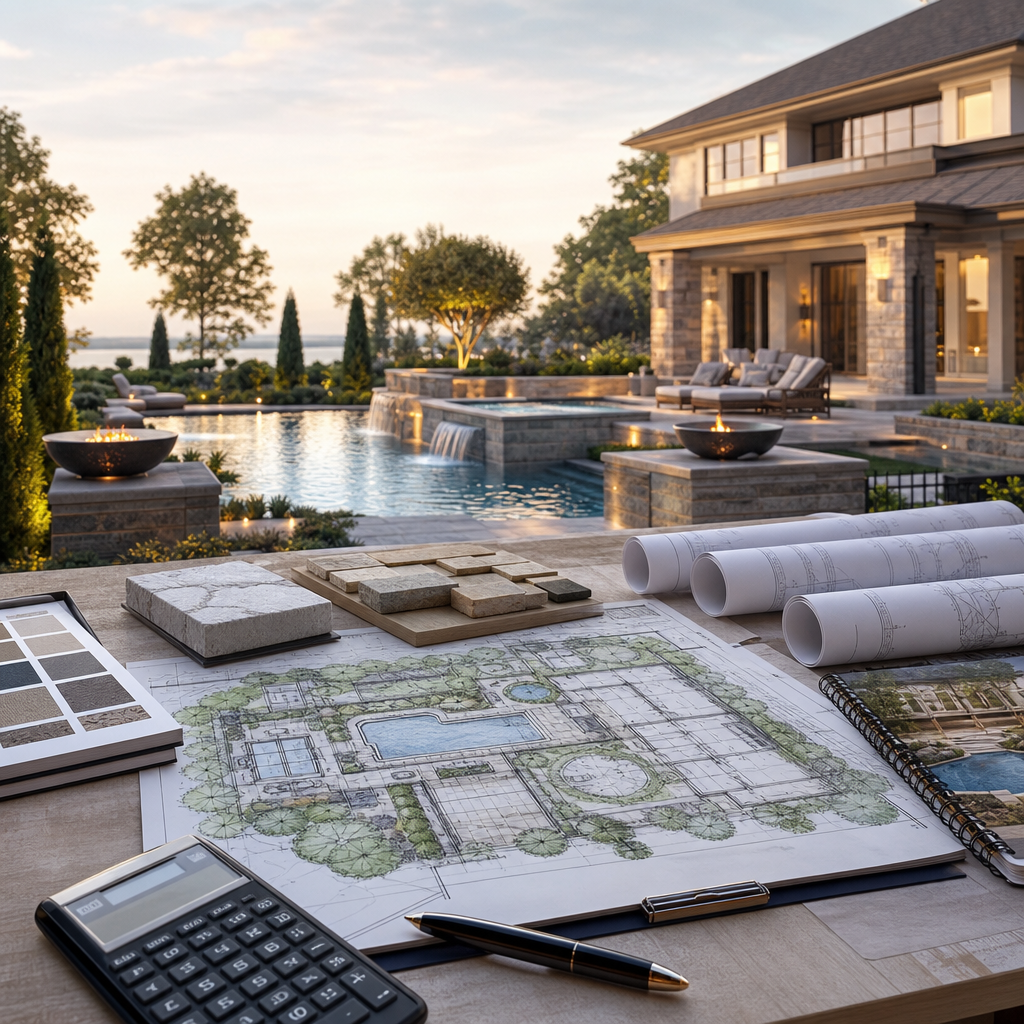
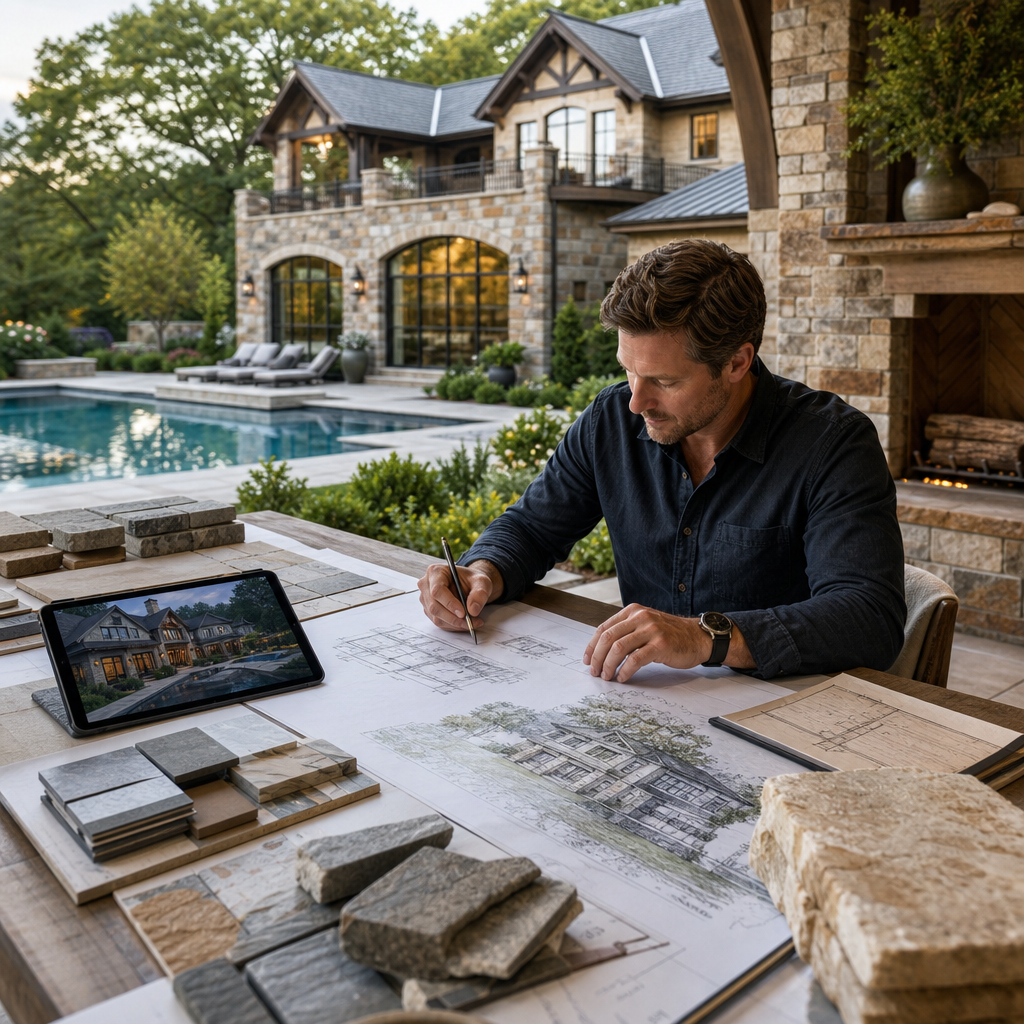
Actionable takeaway: Sketch your space on graph paper before any construction begins. Mark foot traffic patterns, identify where guests naturally gather, and ensure your prep-to-cooking distance feels natural to your cooking style.
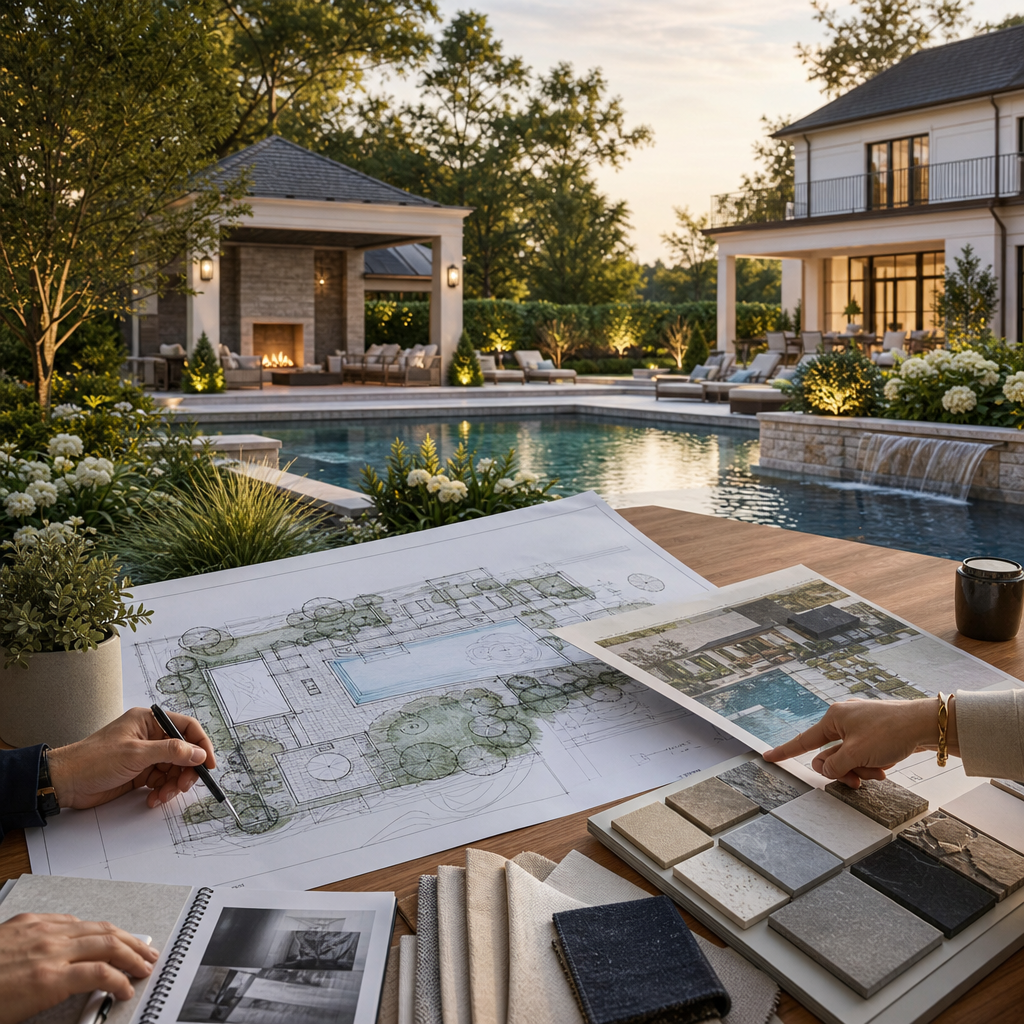
3. Durable Materials and Weatherproof Finishes

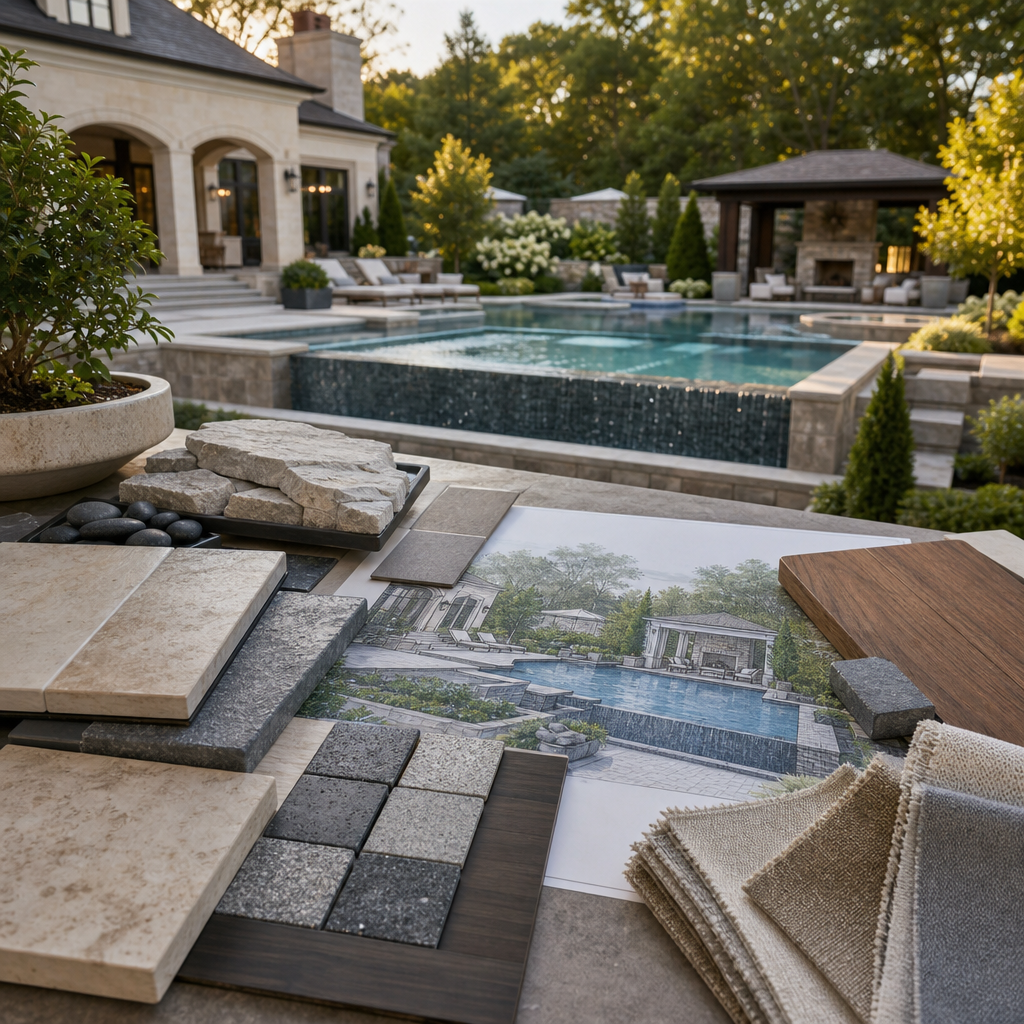
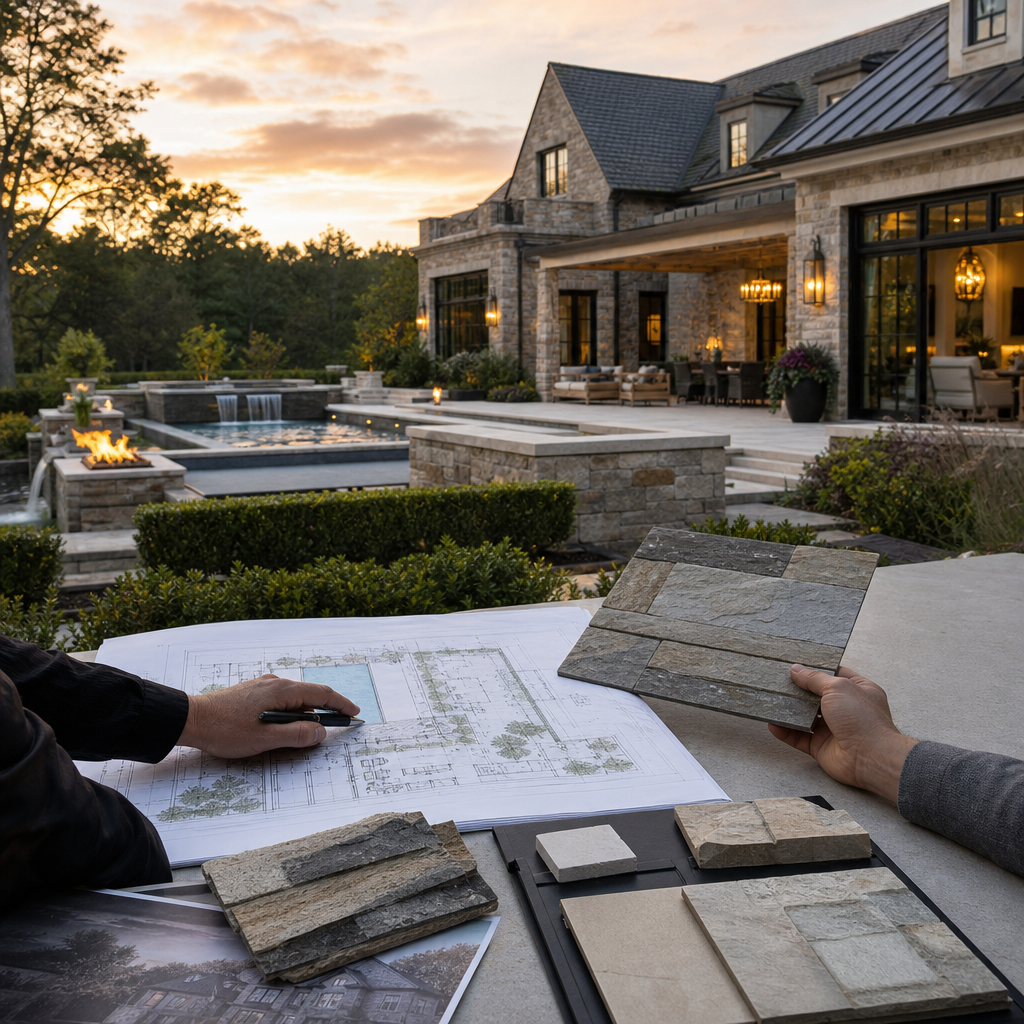
Coastal properties demand materials built for salt air, UV exposure, and temperature swings. Concrete or natural stone countertops outperform laminate; granite and engineered quartz offer luxury finishes with superior durability. We specify locally-sourced stone whenever possible, which adds character while supporting regional suppliers.
Cabinet framing deserves equal attention. Teak and powder-coated aluminum resist the elements better than untreated wood. We use marine-grade sealed plywood with stainless steel hardware throughout. Doors, drawers, and cabinet faces all benefit from UV-resistant powder coating or marine varnish that blocks moisture penetration.
Backsplashes and accent walls serve a practical purpose beyond style. Natural stone or tile backsplashes protect your structure from splatter and grease while withstanding temperature changes. We favor large-format tiles that minimize grout lines, reducing maintenance and preventing water intrusion.
For cushions, pillows, and outdoor textiles, specify solution-dyed fabrics rated for marine environments. These resist fading and moisture damage far better than standard outdoor fabrics. We also recommend removable, washable covers that can handle salt spray and pollen buildup.
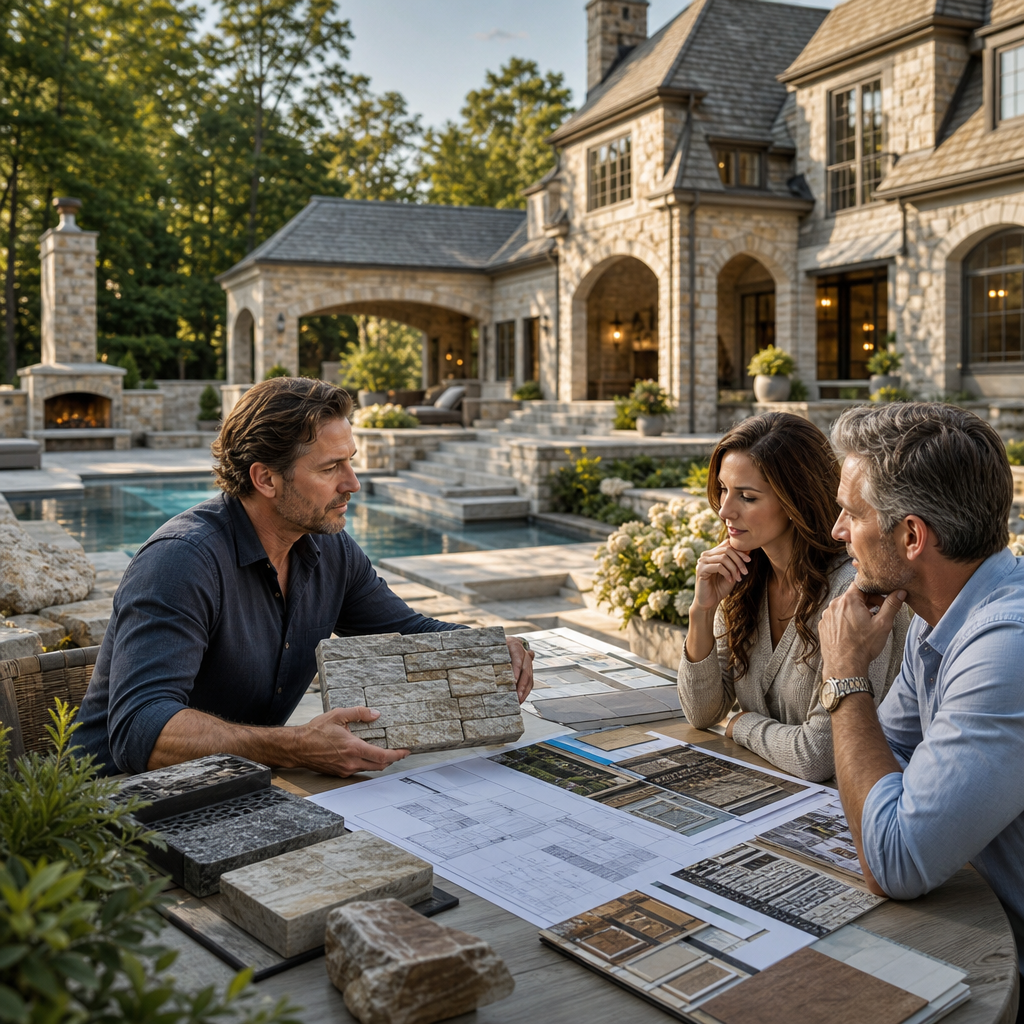
Actionable takeaway: Request material samples and exposure test results from your builder. Ask specifically how materials perform in coastal climates and what maintenance schedule they require over five and ten years.
4. Ambient Lighting and Visual Impact
Lighting transforms your outdoor kitchen from functional to spectacular once the sun sets. We layer three types of illumination: task lighting for cooking safety, ambient lighting for atmosphere, and accent lighting for architectural drama.
Overhead LED strings or recessed soffit lights provide task lighting without harsh shadows on your cooking surface. Position these 8-10 feet above counter height for even illumination. Ambient lighting comes from wall sconces, pendant fixtures over bar seating, and ground-level pathway lights that define the space’s edges.
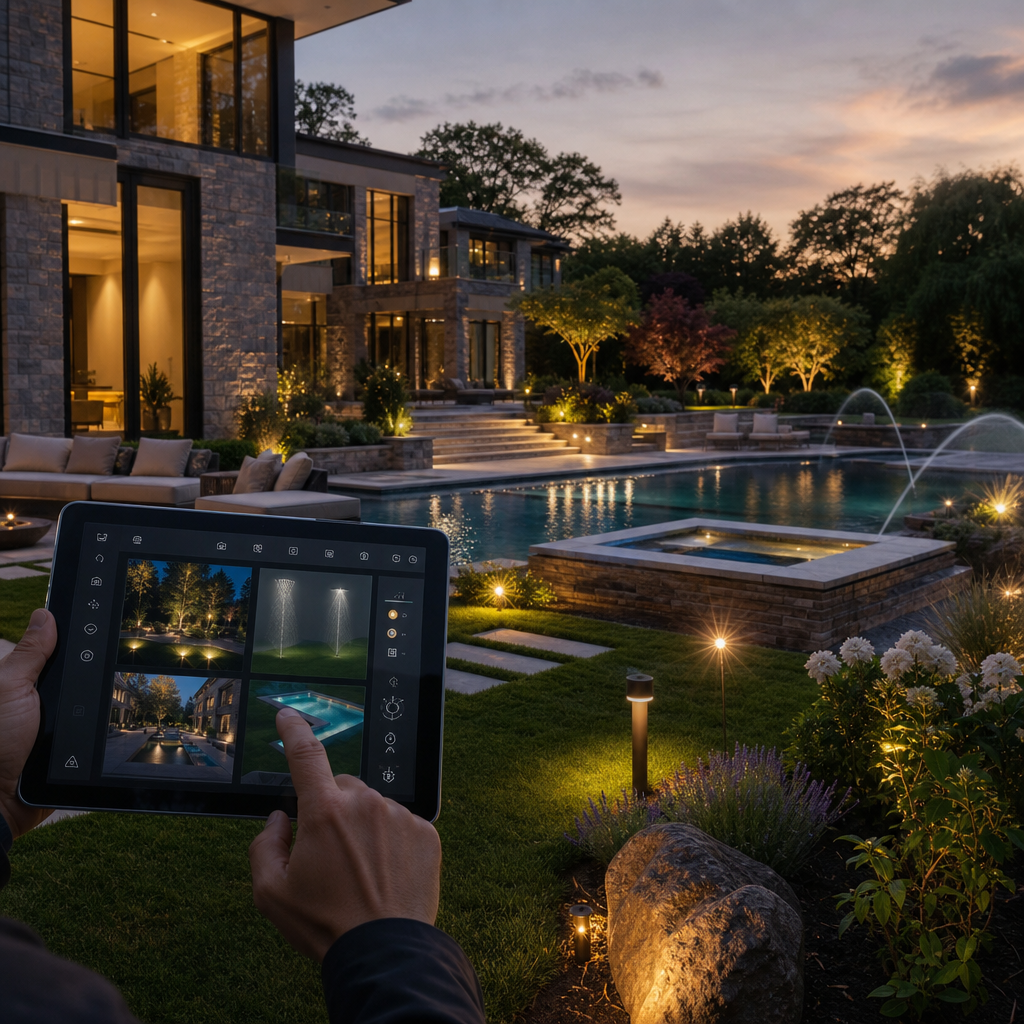
Accent lighting elevates luxury. Uplighting on stone columns, hidden LED strips along architectural features, or backlit water features create visual depth and sophistication. We typically install dimmers so you can adjust mood based on the occasion and time of day.
Color temperature matters more than brightness. Warm white (2700K-3000K) feels inviting and doesn’t attract insects, while cooler temps (4000K+) enhance food presentation during day-to-evening transitions. We specify hardwired LED systems with weatherproof controls, not extension cords and plug-in fixtures that cheapen the overall effect.
Actionable takeaway: Plan your lighting design during late afternoon on the same days you typically entertain. This ensures your lighting works for real use, not just showroom demonstrations.
5. Comfortable Seating and Lounge Areas
Your guests won’t linger in an outdoor kitchen without thoughtfully designed seating and relaxation zones. We integrate bar seating directly adjacent to cooking areas, allowing conversation while meals prep. Counter-height seating with backs provides comfort that backless stools can’t match.

Beyond the bar, create separate lounge zones at varying distances from the kitchen. A deeper lounge area 15-20 feet away offers intimate conversation space, while a central gathering zone near fire features encourages larger group interaction. Layer these zones with premium outdoor furniture that balances comfort and durability.
Quality cushioning makes all the difference. Commercial-grade outdoor furniture uses high-density foam with quick-dry cores that prevent moisture retention. Frames should be powder-coated aluminum or stainless steel, never treated wood that splinters and rots over time.
We also recommend built-in seating along pergolas or under covered areas. These architectural elements double as wind breaks and create intimate alcoves that feel like outdoor rooms rather than exposed patios.
Actionable takeaway: Purchase one premium seating piece before committing to a full set. Live with it through a season to ensure comfort, weather resistance, and maintenance demands align with your expectations.
6. Water Features and Spa Integration
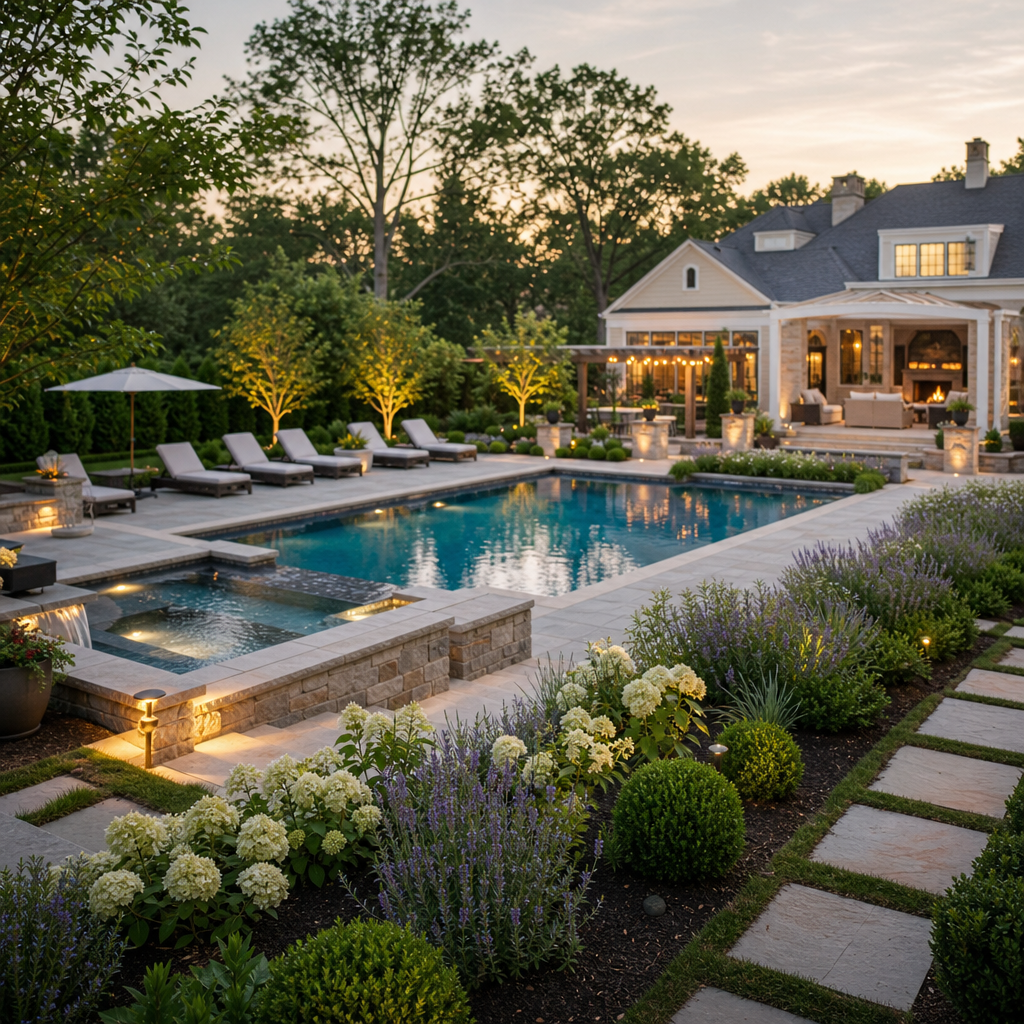
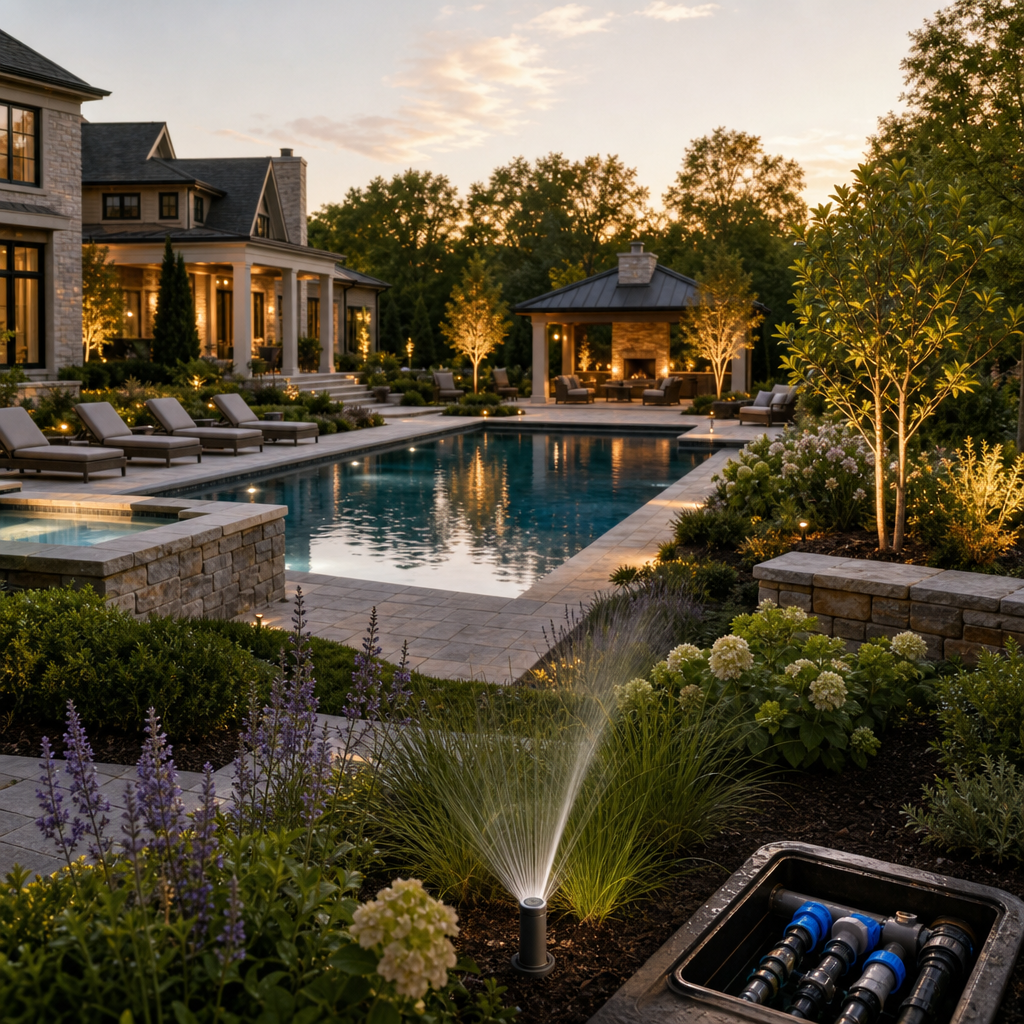
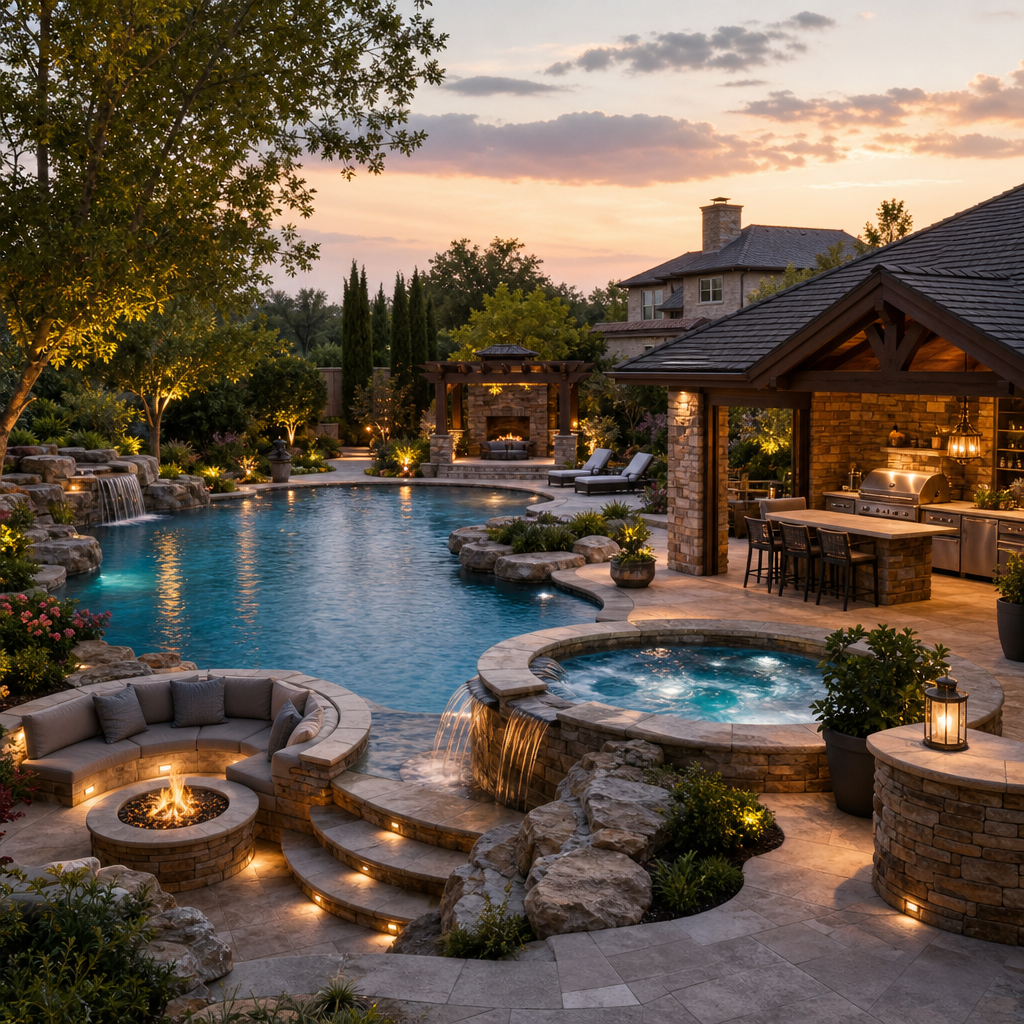
Water features elevate luxury outdoor spaces while providing cooling benefits in warm months. A resort-style spa or soaking tub positioned near lounge seating creates a natural gathering point. We design custom spillover edges, integrated water jets, and temperature controls that make spas functional year-round.
Fountains, cascading water walls, or reflecting pools add sensory richness to your outdoor kitchen area. The sound of flowing water masks neighborhood noise and creates a serene atmosphere that makes entertaining feel like a retreat. When integrated with strategic lighting, water features become dramatic focal points after dark.
Consider the practical side too. Water feature placement should never interfere with cooking zones or create slip hazards. We typically position water features at least 10 feet from your grill area and ensure proper drainage prevents standing water that attracts insects.
Smart pool designs complement outdoor kitchens beautifully. An infinity edge pool that visually extends your entertaining space or a tanning ledge where guests can cool off between courses adds functionality while maintaining design cohesion.
Actionable takeaway: Consult with a structural engineer about water feature placement before finalizing your design. Improper drainage or insufficient foundation support creates expensive problems within months.
7. Year-Round Climate Control Solutions
Long Island’s seasonal shifts demand climate solutions that extend your entertaining season. Retractable awnings provide flexible shade during hot months while remaining invisible on cooler days. Motorized options let you adjust coverage without manual effort, and UV-rated fabrics protect your space from intense afternoon sun.
Heating solutions transform shoulder seasons into comfortable entertaining windows. Overhead infrared heaters warm people directly rather than air, making 50-degree evenings feel pleasant. For year-round use, consider a complete covering system with insulated panels and integrated HVAC that functions like an outdoor room.

Wind control matters too. Strategic placement of privacy walls or pergola screens redirects wind without blocking views. We design these elements to integrate with your kitchen’s aesthetic rather than appearing as afterthoughts.
Proper ventilation ensures cooking odors don’t linger or overwhelm your entertaining space. A well-designed downdraft system or overhead exhaust hood directs smoke away from seating areas without industrial appearance.
Actionable takeaway: Map your space’s microclimate before selecting climate controls. Note where wind patterns originate, which areas receive full sun exposure, and how your natural surroundings either enhance or challenge comfort year-round.
Designing a truly grand outdoor kitchen requires coordinating all seven elements into a cohesive system. Luxury isn’t achieved through individual splurges on high-end appliances; it emerges when every component serves your lifestyle, stands up to your climate, and creates an environment where entertainment feels effortless.
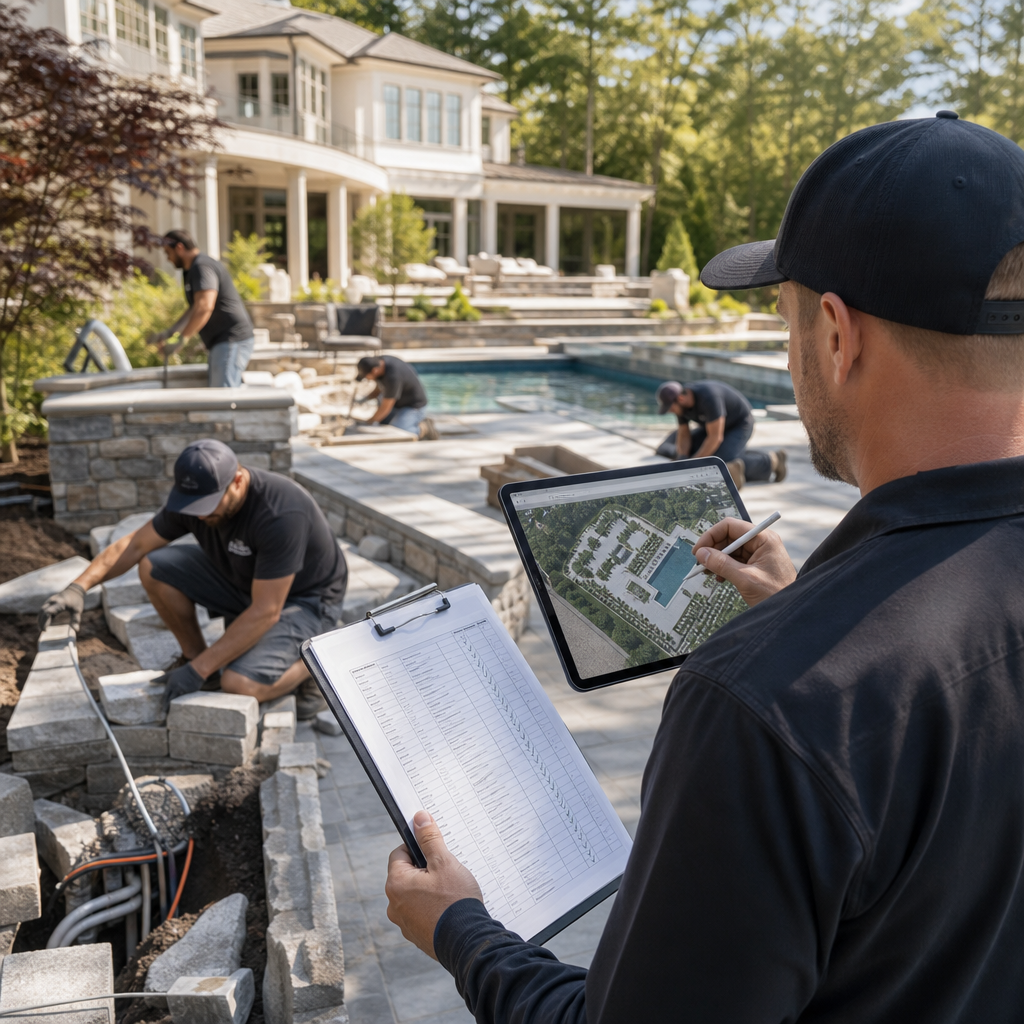
At Monarc Creative Group, we specialize in building exactly these kinds of transformative outdoor spaces for luxury properties across Long Island. We handle complete design, project management, and construction, ensuring every detail reflects the standard you expect. From premium appliance specification through final lighting commissioning, we coordinate every element so your outdoor kitchen functions flawlessly and looks spectacular year-round.
Ready to transform your estate’s outdoor entertaining potential? We’d recommend starting with a site consultation where we assess your space, understand your entertaining vision, and develop a design plan tailored to your property’s unique opportunities and constraints.
Contact us today for a free estimate!
Frequently Asked Questions (FAQ)
How do we design outdoor kitchens that work year-round on Long Island?
We integrate multiple climate control solutions into our designs, including retractable screens, heating systems, and covered structures that allow our clients to use their outdoor kitchens comfortably throughout all four seasons. Our team considers wind exposure, sun angles, and seasonal weather patterns specific to Nassau and Suffolk counties when planning layouts and selecting materials that withstand our coastal environment.
What makes the difference between a standard outdoor kitchen and a luxury entertaining space?
We focus on three core areas: premium cooking appliances with commercial-grade performance, custom masonry and stone work that reflects architectural excellence, and thoughtful workflow planning that mirrors high-end indoor kitchens. When we add ambient lighting, integrated water features, and comfortable lounge areas, the entire outdoor environment transforms into a sophisticated entertaining destination that enhances your estate’s functionality and value.
Can we integrate pools, spas, and outdoor kitchens into one cohesive design?
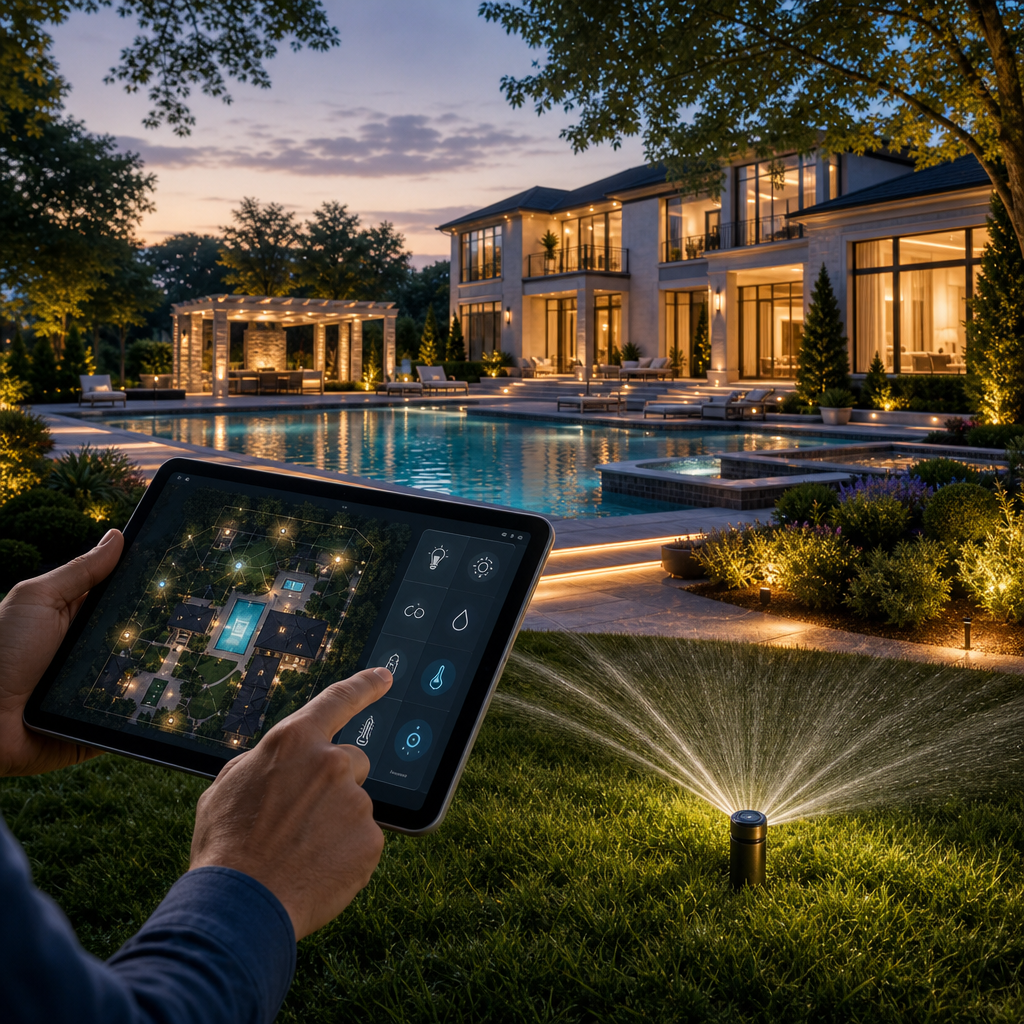
Absolutely. We specialize in creating unified outdoor living ecosystems where your kitchen, dining, pool, and spa areas work together as one experience. Our design process ensures proper spacing, sightlines, and complementary materials so every element feels intentional and your outdoor space functions seamlessly whether you’re entertaining ten guests or hosting a larger gathering.