
1. Establishing Realistic Phase Timelines for Complex Builds
Luxury outdoor transformations are complex undertakings. A high-end residential project might involve coordinating pool excavation, hardscape installation, electrical work, plumbing, landscaping, and custom carpentry across weeks or months. Without deliberate timeline management, delays cascade quickly. Material shipments get pushed back. Trades show up out of sequence. Weather interrupts progress. Suddenly, a project that should have wrapped in eight weeks stretches to six months, frustrating both clients and teams.
We’ve managed hundreds of estate-scale outdoor projects across Long Island. The difference between a project that flows smoothly and one that stumbles comes down to seven core practices. These aren’t theoretical concepts; they’re the operational rhythms that keep luxury builds on track while maintaining the craftsmanship quality that defines premium work.
The biggest mistake we see is compressing timelines to match client wishful thinking rather than project reality. A custom infinity pool with integrated spa, adjacent kitchen, and stone patio cannot reasonably complete in six weeks. Breaking it into honest phases prevents this trap.
We divide luxury outdoor projects into five core phases:
- Site preparation and utility coordination (1-3 weeks depending on excavation scope)
- Structural work including pool shell, hardscape base, and utility infrastructure (2-4 weeks)
- MEP installation: mechanical, electrical, plumbing rough-ins (2-3 weeks)
- Finish installation: stone, pavers, cabinetry, built-ins (3-4 weeks)
- Landscaping, irrigation, and fine details (1-2 weeks)
Each phase includes buffer time for the unexpected. This matters because specialty finishes often require curing time (concrete, stone adhesive, grout). A rush mindset can compromise structural integrity or aesthetic precision.
The actionable step: document each phase with specific deliverables and milestone dates. Communicate these phases to clients upfront so expectations align with physical reality. When a client understands that pool shell curing takes ten days and cannot be accelerated, delays feel less like failure and more like built-in process.
2. Coordinating Multiple Trades in Synchronized Sequences
Luxury projects demand fifteen or more separate trades working in choreographed order. Excavators must finish before concrete crews arrive. Electricians need rough-in access before framers close walls. Hardscape crews cannot lay stone until subgrade prep is complete and compacted.
We maintain a detailed trade sequencing schedule that maps dependencies. Each trade receives clear start and finish dates. More importantly, each trade knows what condition the site must be in when they arrive.
A practical example: if your pool contractor schedules excavation for week two, your HVAC contractor cannot begin equipment installation until the pool shell cures in week four. If landscapers schedule plantings for week eight but irrigation trenches haven’t been backfilled, their timeline collapses. We prevent this by building a master schedule where each trade’s prep work is someone else’s trigger event.
Communication is the linchpin. We hold weekly trade coordination calls where foremen confirm arrival dates, discuss any conflicts, and flag emerging dependencies. A single missed confirmation can trigger a two-week domino effect. The small investment in weekly ten-minute calls eliminates most sequencing failures.
Your action item: create a visual master schedule (Gantt chart or timeline software) that shows trade sequences and handoff points. Share it with all parties. Update it weekly as conditions change. This single document becomes the source of truth.

3. Managing Material Procurement and Specialty Item Lead Times
Luxury finishes have long lead times. Custom stone veneers, high-end pool equipment, specialty outdoor cabinetry, and architectural lighting fixtures often require eight to fourteen weeks from order to delivery. A project that ignores material procurement deadlines will sit idle waiting for a stone shipment while crews stand by.
We typically order long-lead items at project kickoff, sometimes even during the design phase. Custom stonework, for instance, goes on order before excavation begins. Pool equipment orders align with pool shell scheduling so equipment arrives when the shell is ready for MEP integration.
Our procurement team maintains a lead-time tracker for each project. We monitor delivery dates religiously. If a shipment delays, we know immediately and can reschedule dependent trades or mobilize alternative labor. Reactive scrambling costs money; proactive tracking prevents it.
Material shortages are part of 2026 reality. Supply chains remain unpredictable. We build in two-week contingency buffers for high-risk items and maintain relationships with backup suppliers for critical components.
Next steps: identify all long-lead materials in your project scope before design finalizes. Order immediately after contract signature. Use a shared tracking spreadsheet that all project stakeholders can view. Flag any delivery threats ten days in advance, not the day before.
4. Weather Contingency Planning for Outdoor Construction
Long Island weather is unpredictable. A project scheduled for May might face unexpected rain delays in early June. Summer heat can halt concrete pours. Fall dampness delays hardscape work. Winter essentially halts outdoor construction.
We build weather buffers into every timeline. Concrete work typically plans for two weather delay days per week. Landscape and irrigation work assumes 20-30% time loss to rain, wind, or temperature extremes depending on season.
For projects spanning seasonal transitions, we strategically front-load weather-sensitive tasks. Site prep, excavation, and structural work should complete before November when rain increases. Stone installation and hardscape finishing work better in spring months. Landscaping and irrigation typically conclude in early fall before frost.
We also discuss contingency protocols with clients upfront. If heavy rain pushes the pool shell completion back one week, what is the tolerance? Understanding risk appetite prevents schedule disputes later.
Practical action: Build a seasonal plan for your region. Identify which tasks cannot proceed in certain months. Schedule those tasks accordingly. Plan for 20-30% schedule contingency during high-risk weather periods. Communicate these realities to clients so external factors don’t feel like failure.
5. Regular Client Communication and Progress Milestone Updates
Radio silence breeds anxiety. High-net-worth clients expect transparency on project status. Without regular updates, they invent worst-case scenarios or lose confidence in the process.
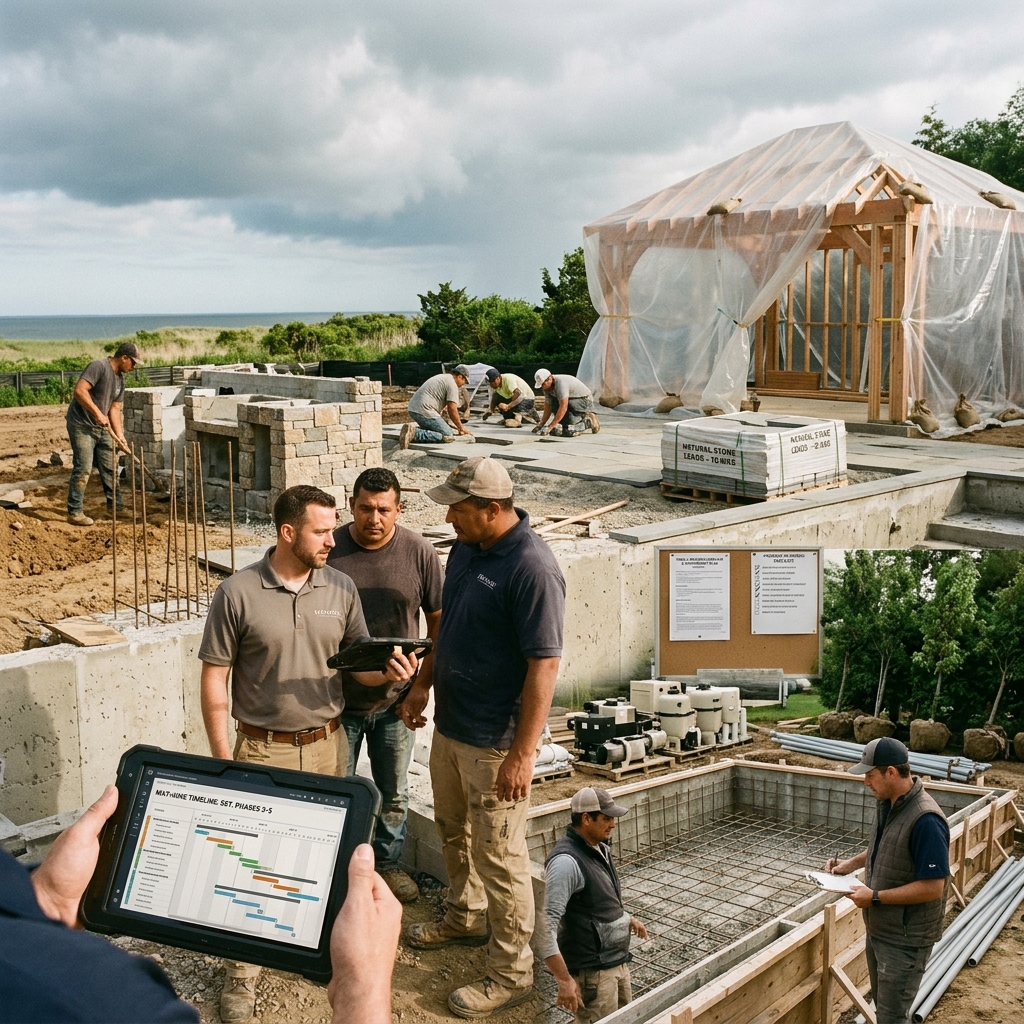
We schedule formal progress briefings every two weeks. These typically occur on-site with photos, timelines, and answers to open questions. Between briefings, clients receive weekly photo updates and status summaries. If a significant issue emerges, we communicate immediately rather than waiting for the scheduled meeting.
Milestone language matters. Instead of vague updates like “progress is good,” we report specifics: “Pool shell excavation completed. Concrete pour scheduled for March 12. Stone base prep begins March 19 contingent on weather approval.” This specificity demonstrates control and builds confidence.
We also acknowledge delays transparently. If material shipment pushes a finish date back two weeks, clients hear about it with explanation and revised timeline, not silence followed by surprise.
The action item: establish a standing communication cadence (we recommend biweekly on-site meetings plus weekly digital updates). Document these meetings. Maintain a living project timeline document that clients can access. When changes occur, update immediately and explain context.
6. Quality Control Checkpoints Throughout Project Execution
Timeline pressure often tempts shortcuts. A crew pressured to finish hardscape quickly might skip proper subgrade compaction or grout curing time. Quality suffers. Worse, defects discovered after handoff are expensive and damaging to relationships.
We embed quality inspections at each phase transition. Before moving from site prep to structural work, we verify proper drainage, utility routing, and grading. Before finishing, we inspect all rough-ins (electrical, plumbing, gas lines) for code compliance and proper installation. Before landscape installation, we walk the entire hardscape to verify finish quality and slope accuracy.
These checkpoints cost time upfront but prevent costly rework later. A single grout joint repair discovered six months after completion creates far more timeline disruption than catching it during final inspection.
We document inspections with photos and checklists. Clients see evidence of quality oversight. Trades know inspection is coming, which encourages excellence during execution.
Your step forward: Define quality criteria for each phase before work begins. Conduct formal inspections at phase transitions. Document findings. Require sign-off from clients and trades confirming readiness for the next phase. This creates accountability without blame.
7. Final Walkthrough and Handoff Protocols
The final walkthrough is not a casual stroll. It’s a methodical three-step process we follow on every luxury project.
First, we conduct a pre-walkthrough inspection with our superintendent and key trades. We create a punch list of any minor items needing attention (a scuff on stone, a disconnected landscape light, drainage testing). Trades correct these before the client walkthrough.
Second, the client walkthrough happens with our project manager and relevant trades present. We walk every zone, discuss operation and maintenance of equipment, review warranties, and answer questions. Clients sign off confirming satisfaction.
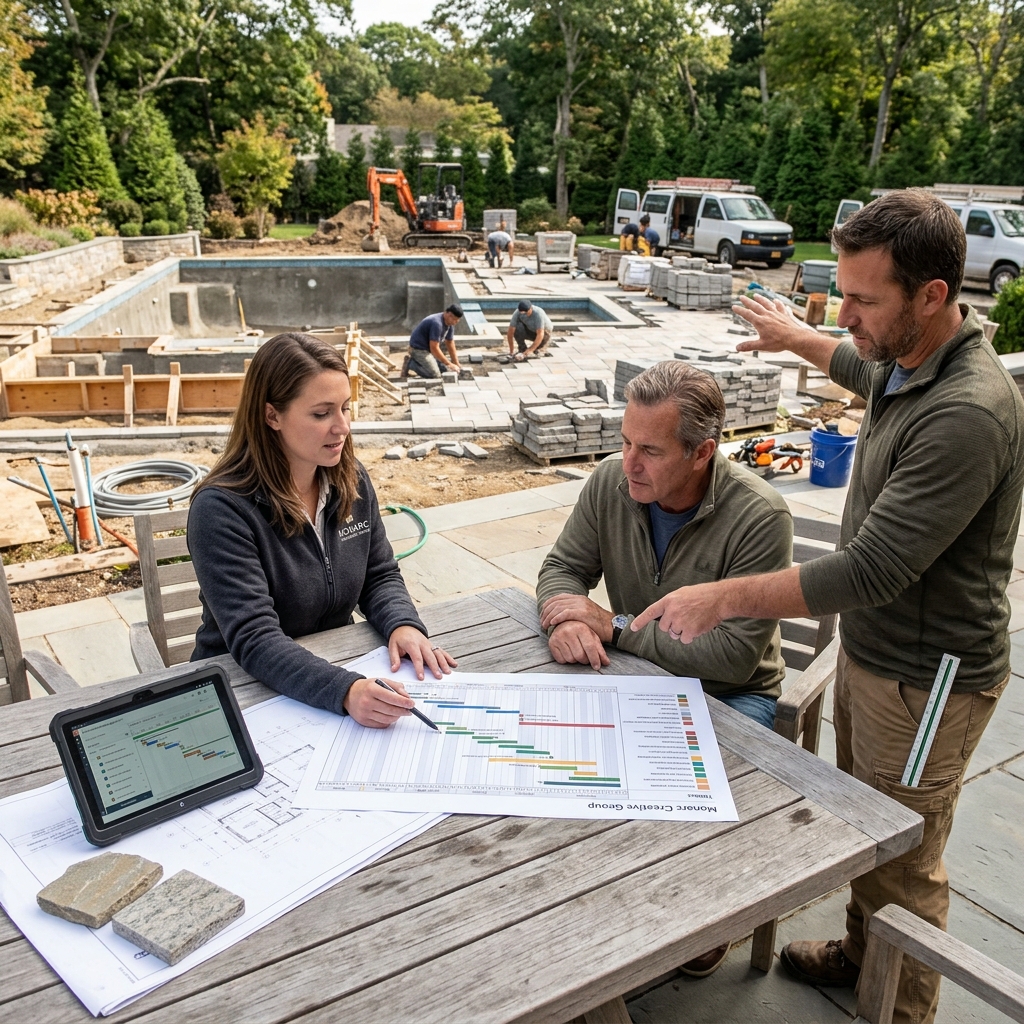
Third, we provide a comprehensive handover package: as-built drawings, equipment manuals, maintenance schedules, warranty information, and emergency contact details. We schedule a one-week post-project check-in to catch any initial adjustment needs.
This protocol prevents misunderstandings and establishes clear responsibility boundaries. It also demonstrates respect for the client’s investment.
Action: Create a handoff checklist specific to your project type. Schedule walkthroughs formally with advance notice. Prepare documentation before handing off. Follow up within one week to catch teething issues early.
—
Managing luxury outdoor project timelines requires honesty about complexity, discipline in execution, and transparency with clients. These seven practices work because they address the actual sources of delays and quality issues that plague construction projects.
At Monarc Creative Group, we’ve built our reputation on delivering high-end outdoor environments that arrive on schedule without sacrificing craftsmanship. Our full-service approach means we control sequencing, procurement, and quality from design through handoff. We don’t coordinate external partners hoping they’ll align; we manage every phase directly. This integration is why our clients experience fewer surprises and timelines that hold.
If you’re planning a luxury outdoor transformation and want a partner who treats your timeline and quality with equal seriousness, explore how we approach custom outdoor construction. The difference between a project that frustrates and one that delights is precisely this operational rigor.
Contact us today for a free estimate!
Frequently Asked Questions (FAQ)
How do we typically structure timelines for luxury outdoor projects?
We break down every estate project into distinct phases, starting with design finalization and permitting, followed by site preparation, infrastructure installation (pools, spas, irrigation), hardscaping, and finishing work. Each phase accounts for material lead times, weather patterns specific to Long Island, and coordination between our specialized trades. We provide our clients with a detailed milestone schedule upfront so everyone understands the sequencing and realistic completion windows for each component.
What causes delays in high-end outdoor construction, and how do we prevent them?
Material procurement is often the biggest variable, particularly for custom stone, specialty pool equipment, and imported landscape materials. We manage lead times proactively by ordering long-lead items immediately after design approval and maintaining relationships with suppliers who understand our timeline requirements. Additionally, we build weather contingencies into our schedules and coordinate our trades meticulously to prevent idle time and bottlenecks on site.
Why does regular communication matter during outdoor construction projects?
We’ve found that consistent updates prevent misaligned expectations and allow us to address issues before they impact the overall schedule. We share progress photos, discuss any adjustments needed due to site conditions or material availability, and confirm upcoming phases with our clients weekly. This transparency helps us maintain trust and ensures decision-making happens quickly when choices need to be made during construction.